South Korea Travel Guide
BRIEF INTRODUCTION
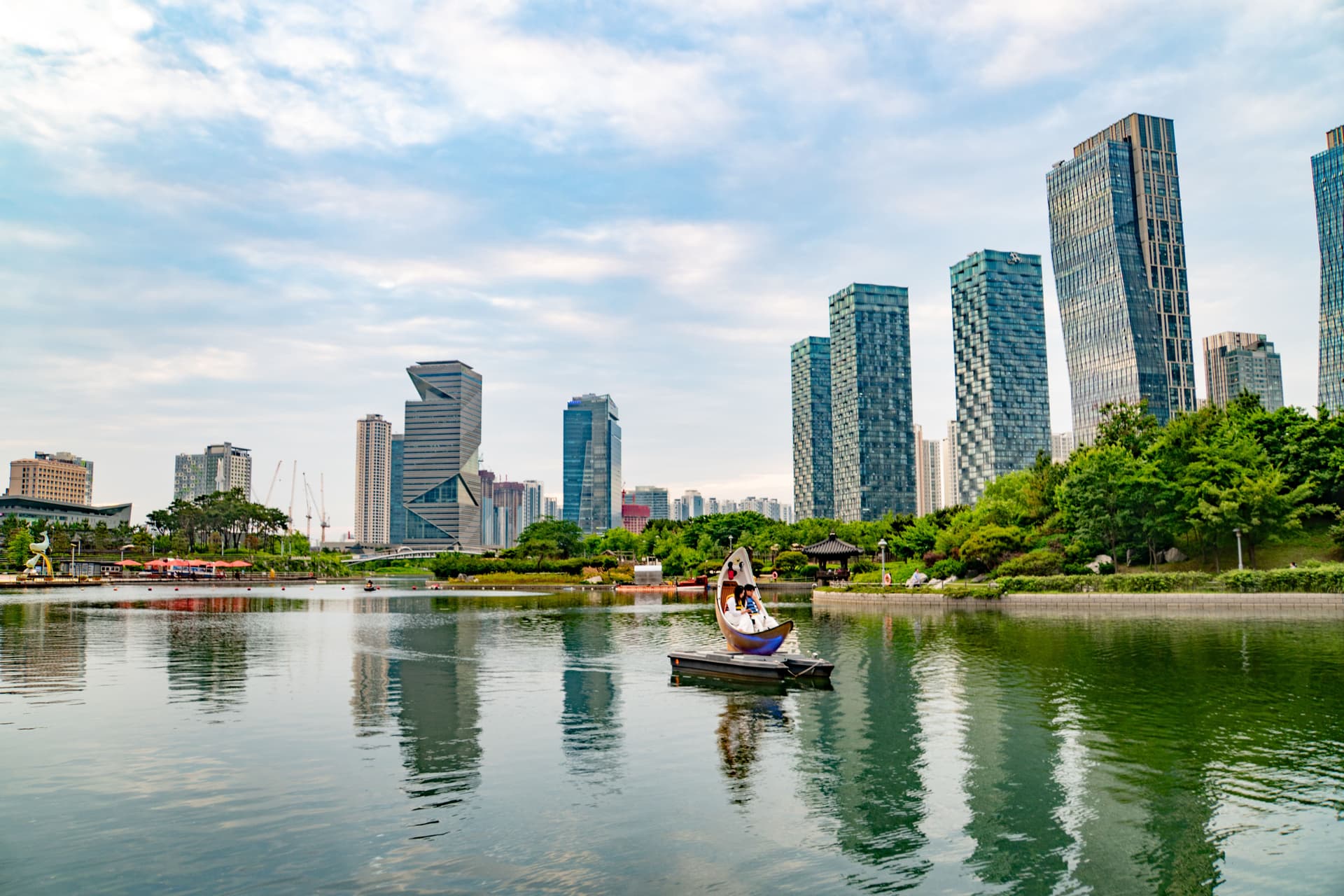
South Korea's influence is felt worldwide, from innovative cars and smartphones to advanced computers and televisions. This industrious nation has transitioned into a global powerhouse, blending modern technology with rich culture and history.
Emerging significantly during the Korean War, which divided the peninsula into North and South, South Korea has since flourished, marked by its first democratic elections in 1987. Visitors are welcomed to a land of dynamic cities, tranquil countryside, and timeless traditions, a journey both extraordinary and unforgettable.
PRACTICAL INFORMATION
Visa and entry requirements
- Citizens of 67 countries, including the United States, the United Kingdom, Canada, Australia, New Zealand, Japan, Israel, and most EU nations, can enter South Korea visa-free for up to 90 days for tourism or business.
- Canadian citizens are permitted a 180-day visa-free stay.
- Brunei, Qatar, and the United Arab Emirates nationals can stay visa-free for up to 30 days.
- We recommend verifying visa eligibility before your arrival.
K-ETA & e-Arrival Card
Visa-free travelers to South Korea are legally required to obtain a Korea Electronic Travel Authorization (K-ETA) before travel. While temporary exemptions have been in place at various times, the K-ETA requirement remains the legal standard, and policies may change with little notice. Check here for details.
As of February 24, 2025, travelers without a valid K-ETA must complete an online e-Arrival Card prior to entry to submit basic travel and personal information. Travelers holding a valid K-ETA, registered residents, and group visa holders are exempt from the e-Arrival Card requirement. Regulations are subject to change, so travelers should consult the official government website and confirm details before departure.
Electricity
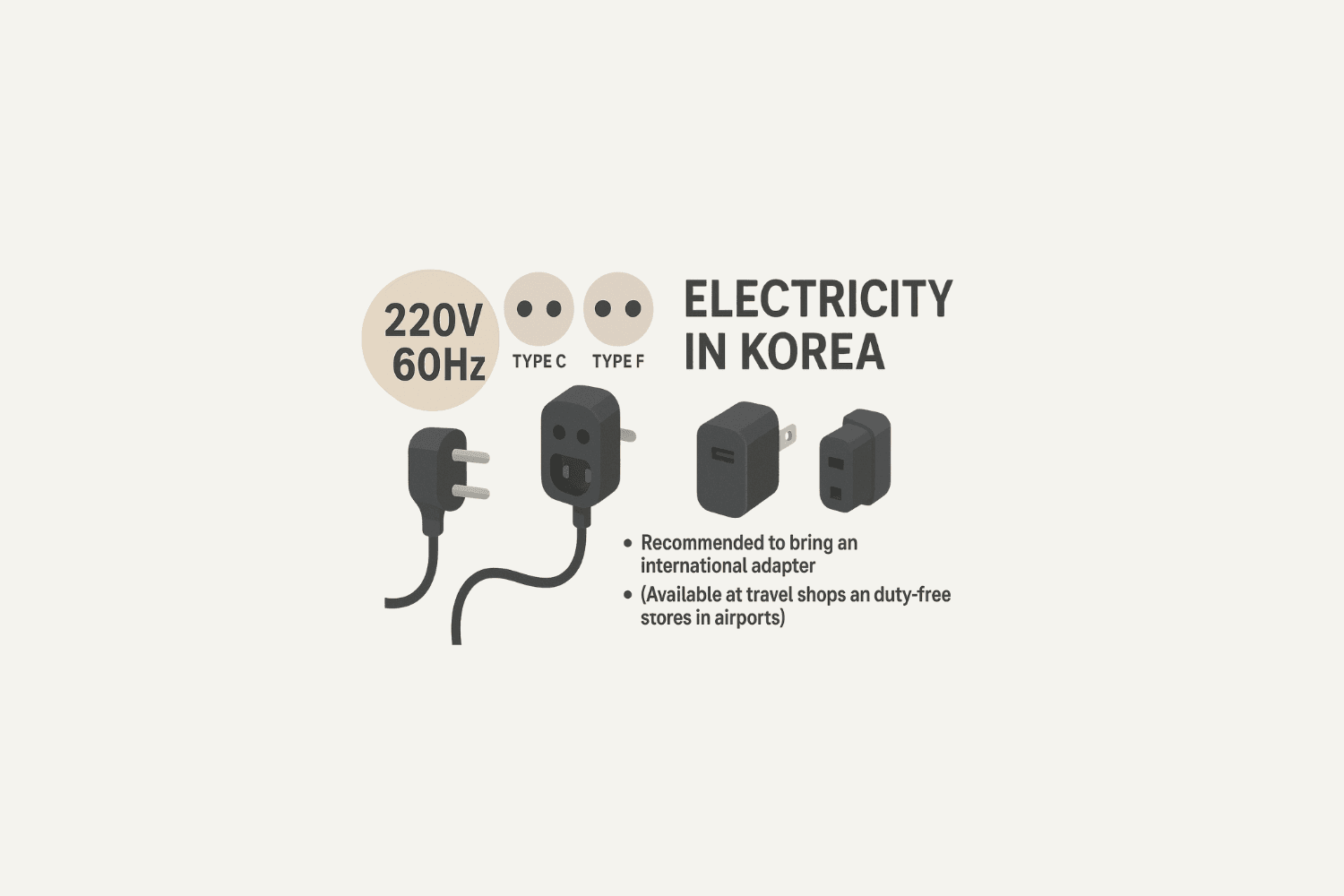
Electricity in Korea is 220V at 60Hz, which is similar to the standard in most of the world. Power outlets are generally European-style, with two round pins (Types C, E, and F).
Some luxury hotels may provide adapters for their guests. However, it’s recommended to bring an international adapter (available at travel shops and duty-free stores in airports).
Internet and SIM cards
South Korea, being at the forefront of global technology, has extensive mobile coverage virtually everywhere. If you plan to use a local SIM card, the easiest option is to purchase one at the airport (available at mini-marts inside the terminals). Buying SIM cards outside the airport can be complicated and might require a contract with the carrier.
Once you’ve purchased the SIM card, you’ll need to activate it (activation instructions are included, and your local guide can assist you). Most SIM cards support 4G LTE or even 5G, so you’ll also have internet access. Many hotels offer Wi-Fi, though in some cases, access may be limited to public areas (e.g., the lobby or dining area).
Another increasingly popular option is the e-SIM (electronic SIM). If your phone supports it (most modern smartphones do), you can purchase and install the virtual SIM before departure, so your phone connects automatically upon landing.
Alternatively, you can buy a roaming package from your local mobile provider. This will usually be the most expensive option, but also the most convenient, assuming the service works smoothly.
Note: If using a local SIM, your home-country number will be inactive, but WhatsApp and similar apps remain functional as long as account settings aren’t changed.
Currency and Money
The currency in South Korea is the South Korean won (Won, KRW, ₩).
Please check the USD=KRW rate here.
As of June 2025:
- 1 USD ≈ 1,380.4 KRW
- 1 EUR ≈ 1,590.0 KRW
You can easily exchange US dollars, euros, and other commonly used currencies at banks or major hotels. For convenience, consider using credit cards, which are widely accepted.
IMPORTANT
If you bring foreign currency notes (USD or EUR), ensure the bills are new, clean, and free from marks or tears. For US dollars, bills issued before 2006 are often not accepted due to counterfeiting concerns. Larger denominations, such as USD 100 or EUR 100, are generally easier to exchange and offer better rates.
Tips (gratuities)
Providing a tip is not obligatory, but it is customary to show appreciation for the exceptional service rendered by professionals who support your journey in the tourism sector. Here are our recommendations for tipping in South Korea:
- Guides (2–4 travelers): USD 8 per person per day
- Drivers (2–4 travelers): USD 2 per person per day
- Guides (5–8 travelers): USD 6 per person per day
- Drivers (5–8 travelers): USD 2 per person per day
- Guides (9–14 travelers): USD 5 per person per day
- Drivers (9–14 travelers): USD 2 per person per day
- Guides (15 travelers and above): USD 4 per person per day
- Drivers (15 travelers and above): USD 2 per person per day
Note: A guide’s or driver’s workday in Korea typically spans 9 hours, from 9:00 AM to 6:00 PM. If they are required beyond these hours, an additional fee of $30 USD per extra hour will be charged. Both the guide and the driver expect to be relieved of duty after 8:00 PM.
Personal expenses
Before your trip, please review your proposal carefully to understand what is included in your package and what is not. If anything is unclear, contact us.
On most of our Korea trips, meals other than hotel breakfasts are not included, so travelers should plan and budget for lunches and dinners throughout the journey.
Travelers mainly need money for meals not included, souvenirs, extra food and drinks, communication, laundry, and other personal expenses. As a general guideline, budgeting USD 300–500 per person for a 10-day trip comfortably covers these costs. For daily meals, USD 30–50 per person per day is usually sufficient, depending on dining choices.
Exchange money in major cities before visiting rural areas and convert leftover currency toward the end of your trip. Credit cards are widely accepted in restaurants and shops.
Note: Korea can be relatively expensive, and small daily purchases, such as coffee or snacks, can add up quickly.
South Korea’s major cities, including Seoul, Busan, and Incheon, feature a variety of international grocery options. Supermarket chains such as E-Mart, Lotte Mart, and Homeplus stock a considerable range of imported products alongside local goods. Specialty import stores and premium retailers like Costco and Shinsegae Food Market cater to expatriates and affluent shoppers. Convenience stores such as CU and GS25, while primarily Korean, also carry select international snacks and beverages. In rural and less urbanized areas, most supplies are sourced locally.
Health
We are not authorized to provide medical advice. Please consult your doctor before your trip about vaccinations or precautions. If you take regular medication, bring enough for the entire trip, as some medicines are hard to find outside of your country. Always carry medications in your hand luggage, not checked baggage.
Medical record and liability release: All travelers must complete and sign a trip application form, which includes these documents.
South Korea offers a high standard of medical care, with modern hospitals, English-speaking doctors in major cities, and efficient emergency response services. As a developed nation, it poses minimal health risks to international visitors, and no special vaccinations are currently required for entry by international health authorities.
Travel Health Insurance
Valid travel insurance is mandatory for all travelers. Your policy must cover medical evacuation, including emergency air transport back to your home country.
Carry both printed and digital copies of your insurance certificate, along with your policy number and your insurer’s 24/7 emergency contact details. If anything unexpected happens during your trip, our team and local partners will assist where possible, including helping you communicate with medical staff and your insurance company.
Your insurance policy should ideally include:
- General medical care (doctor visits, diagnostics, prescriptions)
- Emergency treatment and hospitalization
- Medical evacuation or repatriation, in case of serious illness or injury
Accommodations
Korea offers a wide range of accommodations, from simple village homestays where you sleep on thin mattresses in shared family spaces, to luxurious resorts. In major cities and near key tourist sites, options range from guesthouses to high-end hotels. Unless otherwise requested, we typically reserve four-star hotels. When a four-star option is unavailable, we select the next-best option, often a three-star property or, occasionally, a well-kept guesthouse or homestay.
Standard hotel check-in is at 3 PM, and check-out is at 11 AM. Many hotels allow early check-in if rooms are available, but to guarantee this, we recommend arranging it in advance; supplements may apply. For late check-outs, it's best to inquire with the hotel reception the night before departure, though many properties offer a 2–4-hour grace period. If you're considering a triple room, be aware that few hotels in Korea offer proper triple rooms. Most offer a double bed with a rollaway, or a twin room with a fold-out bed. These setups may feel cramped, and the extra bed can be uncomfortable. We can certainly book a triple room if required, but we recommend considering these limitations.
When selecting accommodations, we consider location, service standards, renovation history, booking flexibility, and value. We also prioritize practical details such as breakfast quality, room cleanliness, and responsiveness of service. Hotel standards can change over time, so we greatly value your feedback to help keep our recommendations accurate and up to date.
Homestays or Monastery Stays
On some of our tours, accommodation may include homestays or stays at monasteries, which offer a deeper cultural experience. These are traditionally styled and typically involve sleeping on a mattress on the floor, with clean sheets and a blanket, and often heated flooring for comfort. Similar arrangements may also be found in remote hostels.
If you are not comfortable with this style of accommodation or prefer Western-style beds, please inform us in advance, so we can plan your itinerary accordingly.
Transportation and Travel
South Korea offers one of the most efficient and modern transportation systems in Asia, making travel smooth and highly accessible. Most itineraries combine private vehicle transfers with public transport, depending on route and group size. Sedans or vans are typically used for airport transfers and day tours, while trains and metros are widely used for intercity and urban travel.
The country’s high-speed rail network (KTX) connects major cities such as Seoul, Busan, Daegu, and Gwangju, offering quick and comfortable travel, significantly reducing travel time compared to driving. Trains are clean, punctual, and easy to navigate, though luggage space is limited, especially on high-speed services. Travelers are expected to manage their own luggage, and large suitcases can be cumbersome during peak travel hours.
Urban public transportation, including subways and buses, is reliable, affordable, and well-signposted in English. Taxis are widely available, safe, and reasonably priced, though traffic congestion is common during rush hour in Seoul and other major cities.
Overall, travel in South Korea is flexible, efficient, and traveler-friendly, but planning ahead for luggage handling and peak-hour congestion will make the experience more comfortable.
NOTE: If you are traveling with heavy or multiple pieces of luggage and your itinerary includes train travel, we recommend arranging luggage transfer in advance. Luggage space on trains is limited, and handling large bags can be inconvenient. Please refer to your trip proposal, and contact us if you would like us to arrange separate luggage delivery for an additional fee, so you can travel comfortably and hands-free.
Flights and Baggage
South Korea’s largest international gateway is Incheon International Airport (Seoul), supported by Gimpo International Airport (Seoul’s domestic hub), Gimhae International Airport (Busan), and Jeju International Airport. Domestic flights are frequent, especially routes to and from Jeju Island, while the high-speed KTX rail network competes with flights on short-haul routes between major cities. In accordance with international aviation standards, most international flights to South Korea include the following baggage allowances:
- Checked baggage:
- Economy Class: typically, 20–25 kg
- Business Class: typically, up to 30 kg (Exact limits vary by airline; please refer to your specific ticket or airline policy)
- Carry-on baggage:
- Up to 7 kg
- Maximum dimensions: 45 x 35 x 20 cm
These same general limits also apply to domestic flights within South Korea, though it is advisable to confirm with the carrier prior to travel. The exact information should be listed on your flight ticket. If not clear, contact us for more information.
Please ensure that any medication, valuables, or essential travel documents are in your carry-on, as access to checked luggage may not be available during delays or layovers.
Food
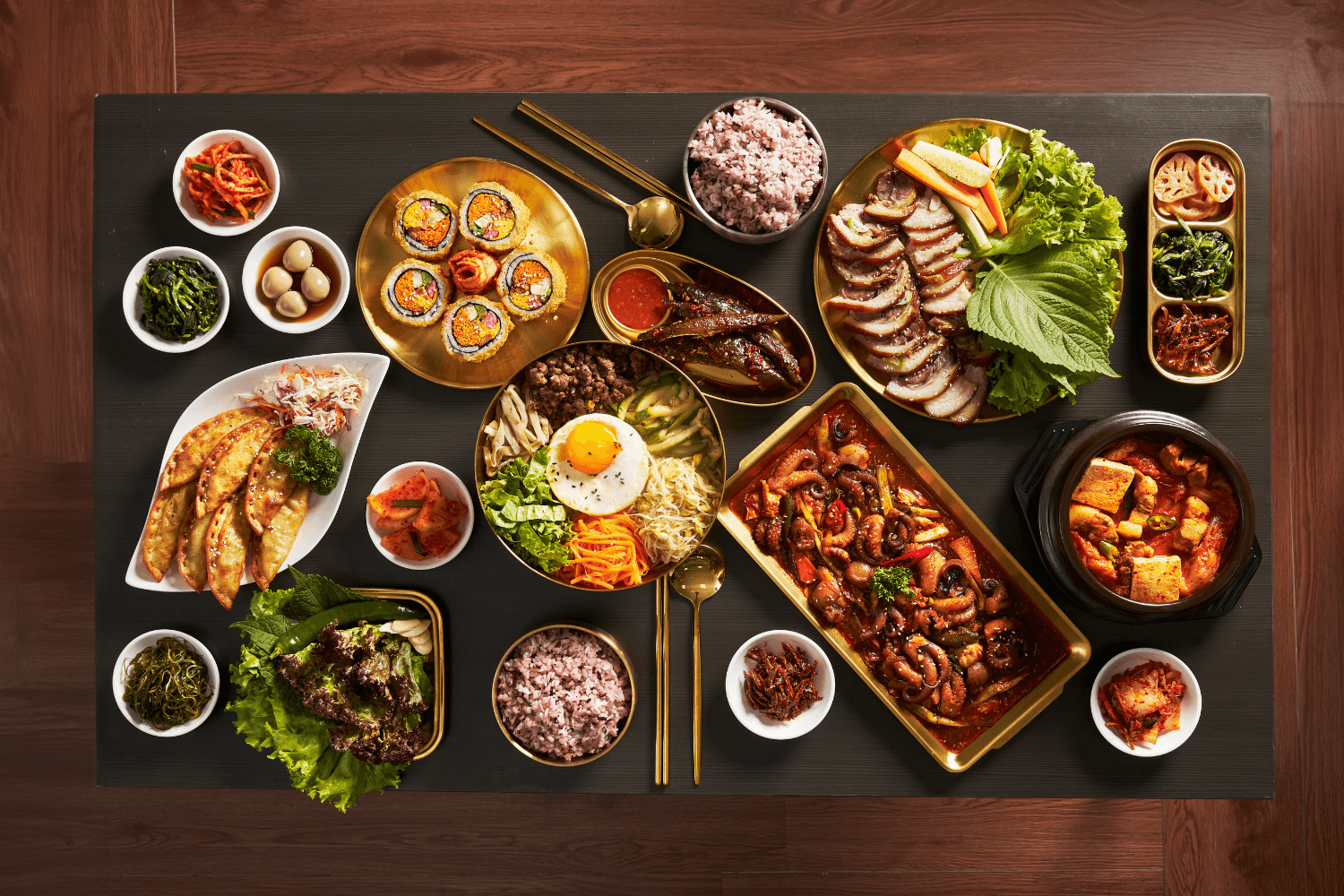
Korean cuisine is distinctive and may differ significantly from flavors familiar to Western palates. Many dishes feature bold seasonings, fermentation, and spice, which can be challenging for those unaccustomed to such tastes. Travelers should be aware of this and let us know their dietary preferences when necessary. A wide variety of small side dishes, known as banchan, typically accompany meals, with kimchi, a spicy fermented vegetable, being the most prominent. While Korean food is central to the cultural experience, almost every city offers restaurants serving Western-style food such as pizza, burgers, and other familiar options.
For travelers willing to explore local flavors, five dishes commonly recommended in Korea include:
- Kimchi (김치) – The beloved spicy sidekick at every Korean table
- Samgyeopsal (삼겹살) – Pork belly strips sizzling on a grill
- Soft Tofu Stew (순두부찌개)
- Tteokbokki (떡볶이) – Sliced rice cakes in a sweet and spicy sauce
- Bibimbap (비빔밥) – A “lunch-in-a-bowl” of rice, mixed vegetables, beef, and egg
Tap water is safe to drink in all urban centers, though bottled water is widely available for those who prefer it.
Cultural Etiquette & Modesty Norms
Korean society is traditional, with a clearly defined hierarchy. Korean ethics, rooted in Confucian philosophy, emphasize specific behavioral codes. While these ethics are intricate, tourists aren’t expected to master them. South Koreans are well-acquainted with Western norms and will understand if you behave accordingly. That said, personal respect is extremely important in Korea.
Avoid loud conversations in your native language and especially refrain from making jokes in your native tongue in the presence of locals, as they may not understand and might assume the joke is at their expense. Try to be open-minded toward local customs. These may seem unusual, foreign, or even strange, but they are part of Korea's heritage. Be curious, not critical. Just think of it like visiting your quirky relative who insists on calling dinner at 4 p.m. Accept your hosts as they are, and they will return the gesture warmly.
Key Etiquette Tips:
- “Saving face” (Kibun): Avoid embarrassing or confronting others directly; maintain dignity to build mutual respect.
- Bowing: Offer a slight bow when greeting; exaggeration is unnecessary.
- Handshakes: Among men, follow the bow with a handshake. Support your shaking hand with your left hand underneath for extra respect.
- Personal space: Avoid gestures such as patting someone's back or placing your hand on their shoulder, as these may be seen as disrespectful.
- Business cards: Present and receive cards with both hands. Take a moment to read the card before putting it away.
- Names and titles: Use titles and surnames or "Mr." and "Ms." with the family name; avoid first names. Korean surnames appear first.
- Avoid saying “No” directly: Opt for polite excuses or alternatives to preserve harmony and avoid confrontation.
- Drinking etiquette: Pour drinks for others, and they will pour for you. Leave your glass partially full to decline. The first drink is important socially, so try to take part.
- Removing shoes: Take off shoes when entering homes, traditional inns, temples, or traditional restaurants. Use the slippers provided at the entrance.
- During meals, Koreans traditionally eat seated on cushions at low tables, but Western-style seating is also available.
- Chopsticks and spoon: Metal chopsticks are common; ask for a fork if needed. Avoid sticking utensils vertically into rice, as it resembles funeral rituals.
- Utensil etiquette: Do not tap plates or bowls with utensils, as it signals dissatisfaction.
- Praise the food: Compliment the food, even if not asked directly. Politeness is appreciated.
- Tipping: Tipping isn’t required but is becoming more accepted. Offer tips discreetly if you choose to.
Weather and Seasons
South Korea experiences pleasant weather for most of the year, but its summers (from early June to late August) can be hot, humid, and rainy due to the monsoon season. Here’s a quick guide to help you plan your visit:
- Spring (April–May): Comfortable temperatures with beautiful blossoms, including cherry blossoms that rival Japan’s.
- Autumn (September–October): Crisp weather with stunning fall foliage, making it an ideal time to explore.
- Winter (December–February): Cold yet enchanting, with snowy landscapes. While activities may be more limited, the scenery is magical.
- Summer (June–August): Hot, humid, and rainy, the least recommended time to travel due to the monsoon season.
For your convenience, we have included a detailed table of monthly weather data for Seoul, Busan, and Jeju, outlining average high/low temperatures, rainfall, and the number of rainy days per month.
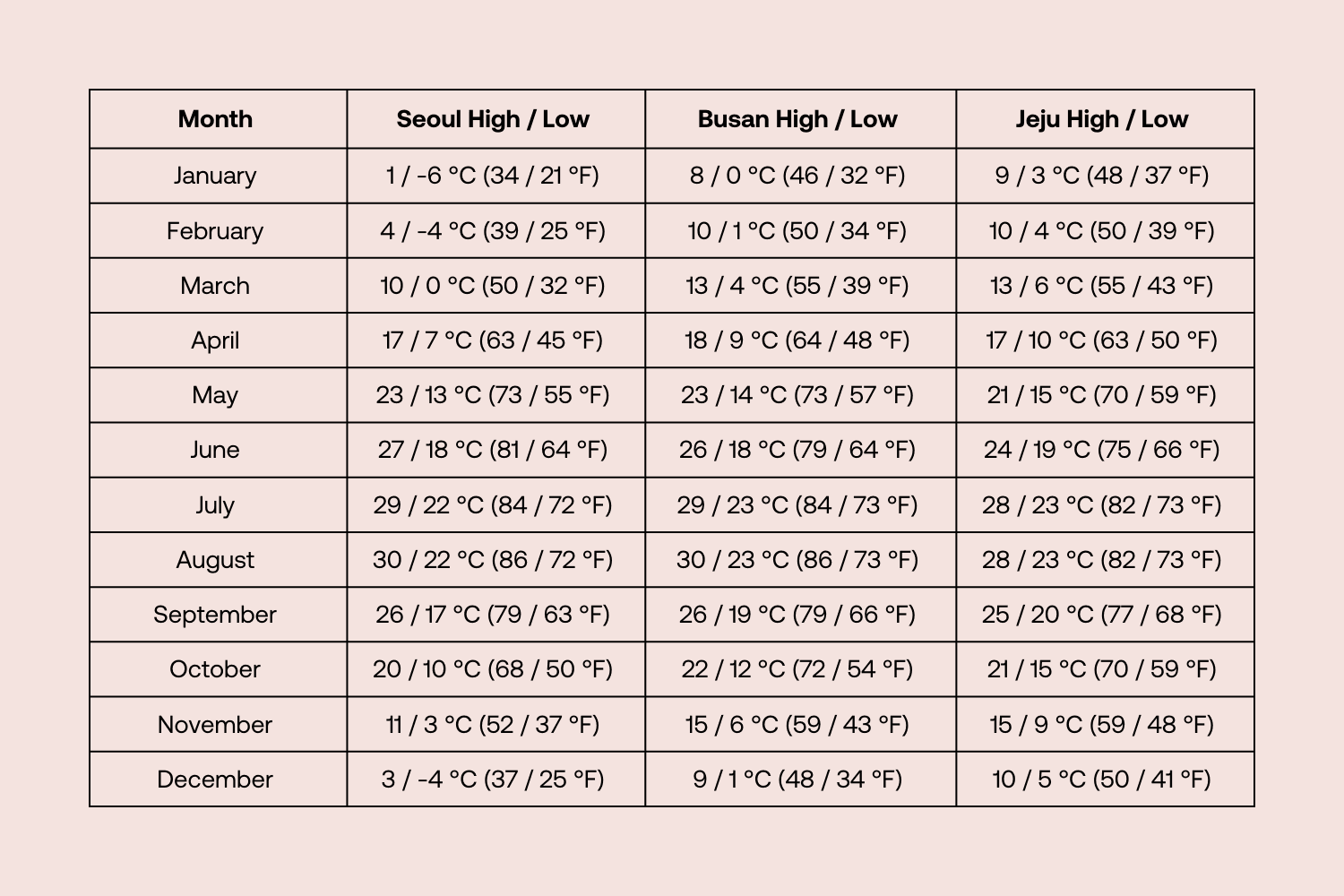
Key Insights
- Seoul experiences colder winters with temperatures as low as -6°C in January.
- Busan and Jeju have milder climates, with highs of 8-10°C and lows around 0-5°C during the winter months.
- Summer temperatures peak in July and August, with averages of 29-30°C in all three regions.
- Jeju remains relatively warm year-round, making it an appealing destination for mild weather.
Recommended Packing List
Smart, versatile packing ensures both comfort and cultural respect while traveling through Korea. Here's what to include:
Essentials
- Travel insurance policy details (printed and digital)
- Local currency (KRW / Won) and backup credit/debit card
- International travel adapter (Korea: 220V, 60Hz; plugs Type C & F (two round pins)
- Unlocked smartphone + local SIM card/e-SIM installed/ or roaming enabled
Clothing (Layered for Flexibility)
- Lightweight tops (cotton, linen, moisture-wicking)
- Long-sleeve shirts for sun and cultural sensitivity
- Warm layer (fleece or insulated jacket, especially for autumn/spring travel)
- Waterproof jacket or windbreaker
- Comfortable walking shoes (terrain may vary)
- Sandals or slip-ons (for hotel or light walking)
- Modest attire for temples or rural visits (cover shoulders and knees)
- Smart-casual outfit for fine dining or cultural events
- Undergarments & sleepwear
- Sunhat or cap, scarf, and light gloves (in colder seasons)
Toiletries & Health
- Prescription medications (with original labels)
- Basic first-aid kit (pain relievers, motion sickness pills, etc.)
- Hand sanitizer, wet wipes, and toilet paper/tissues (public toilets may lack supplies)
- Sunscreen (SPF 30 or higher) and lip balm
- Bug repellent
- Travel-size toiletries (hotels may not provide Western brands)
- Reusable water bottle (hotels often provide filtered water)
- Travel pillow and eye mask for flights or long train rides
- Small travel laundry kit or laundry service allowance
History
South Korea’s history spans thousands of years, beginning with early societies such as Gojoseon, traditionally founded in 2333 BCE, which established rudimentary governance and trade networks. By the Three Kingdoms period (57 BCE–668 CE), Goguryeo, Baekje, and Silla had formed sophisticated kingdoms marked by advances in architecture, metallurgy, Buddhism, and diplomacy. The unification under Silla in 668 CE and later the Goryeo Dynasty (918–1392) consolidated central authority, expanded cultural and artistic development, and strengthened foreign trade, particularly with China. The Joseon Dynasty (1392–1897) brought profound societal transformation through Confucian governance, the codification of laws, and the creation of Hangul in 1443–1446, which remains Korea’s unique writing system. Joseon also saw a flourishing of scholarship, art, and architecture, exemplified by royal palaces and temples. However, the kingdom faced invasions, including the Japanese campaigns of 1592–1598 and Manchu incursions in the 17th century. In 1897, the Korean Empire was proclaimed, but Japan’s imperial ambitions culminated in colonization from 1910 to 1945, a period marked by industrialization, cultural suppression, forced labor, and resistance movements. Liberation in 1945 was quickly followed by division along the 38th parallel, creating North and South Korea. In 1948, the Republic of Korea was established in the south with Syngman Rhee as president.
The Korean War (1950–1953) devastated the nation, leaving millions dead, cities in ruins, and the peninsula divided by the DMZ, a legacy that still shapes geopolitics today. The post-war period witnessed rapid economic development beginning in the 1960s, dubbed the “Miracle on the Han River,” driven by export-oriented industrialization, technological innovation, and the rise of chaebols such as Samsung, Hyundai, and LG. Political evolution accompanied economic growth, with authoritarian regimes eventually yielding to democratization, culminating in the June Democratic Uprising of 1987 and subsequent peaceful transfers of power.
Contemporary South Korea balances a rich historical heritage with cutting-edge technology, cultural exports such as K-pop, cinema, and culinary innovation, and dynamic urban centers. At the same time, visitors can explore ancient palaces and temples, scenic natural landscapes, and bustling modern cities. Throughout its history, South Korea has demonstrated remarkable resilience, blending traditional values with rapid modernization, offering travelers a country where the echoes of millennia coexist with contemporary vibrancy.
Religion
Religion in South Korea is not only a matter of personal faith, but it’s also an essential thread woven into the country’s identity, influencing everything from architecture and etiquette to festivals and family values. While modern South Korea dazzles with its high-tech cities and cutting-edge pop culture, its spiritual roots remain deep and complex.
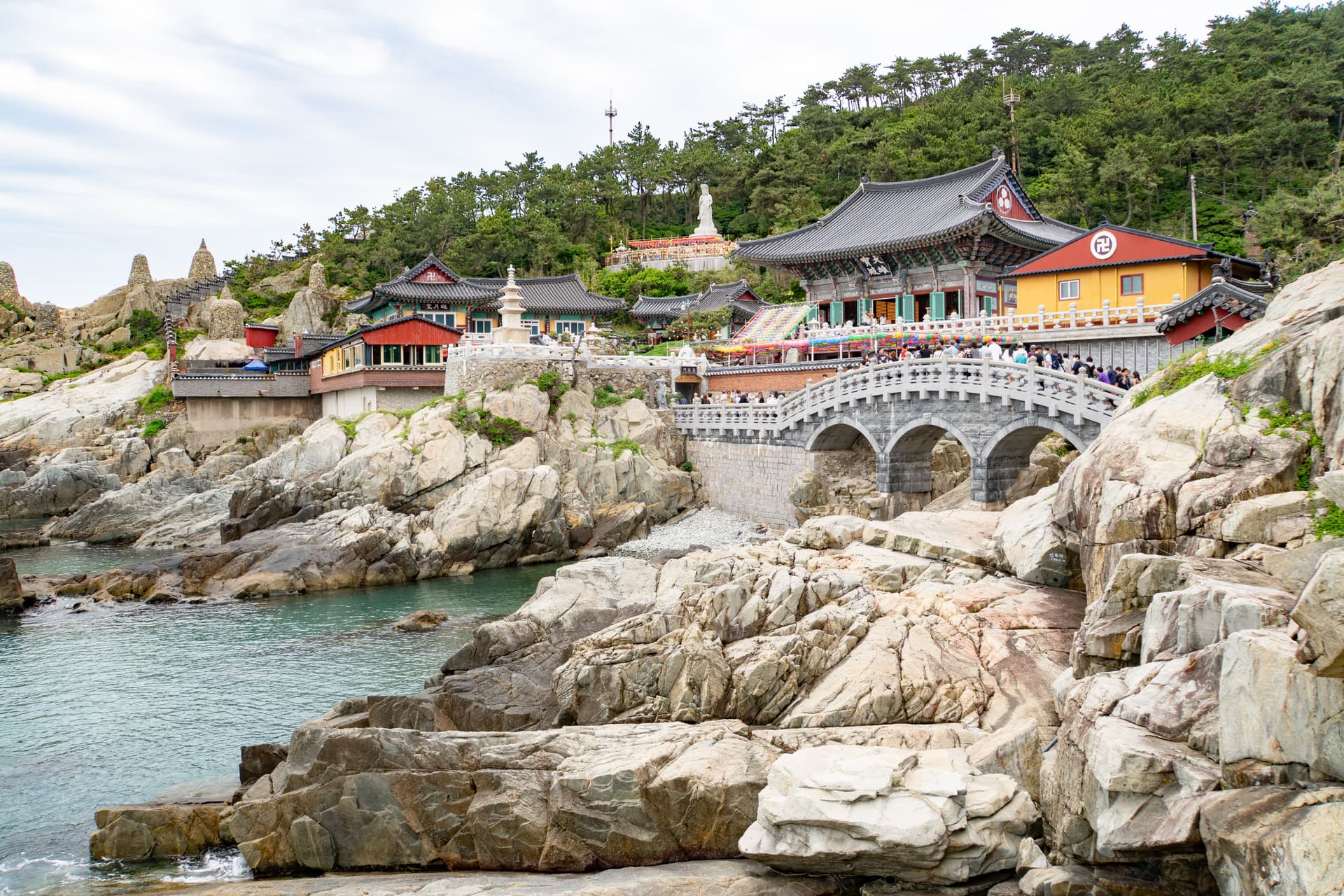
Buddhism, which first took hold during the Three Kingdoms period over 1,500 years ago, continues to resonate in daily life. Tranquil temples like Jogyesa in Seoul or Haeinsa in the forested mountains of Gyeongsangnam-do provide peaceful sanctuaries amid the modern rush, their incense-scented halls echoing with chanting monks and ancient rituals. For travelers seeking immersive cultural experiences, temple stay programs across the country offer a rare opportunity to engage in silent meditation, tea ceremonies, and monastic meals.
Equally prominent is Christianity, which surged in the 20th century and now shapes much of Korea’s urban spiritual life. Seoul is home to some of the world’s largest megachurches, while smaller Protestant and Catholic congregations are visible in nearly every neighborhood, often marked by glowing red crosses rising above the skyline.
Perhaps most distinctively, Confucianism, though not practiced as a religion in the traditional sense, remains the philosophical bedrock of Korean society. Its values, filial piety, respect for elders, communal harmony, and social order, are evident in everything from the structure of family life to business etiquette and national holidays.
A growing number of South Koreans today identify as non-religious, especially among the younger generations. However, spirituality in Korea often transcends formal labels. Shamanic rituals, ancestral rites, and a quiet reverence for tradition continue to flourish, particularly in rural communities.
For culturally attuned travelers, South Korea offers not just sacred sites, but a living interplay of ancient and modern belief systems, subtle, elegant, and deeply interwoven with the rhythms of daily life.
Geography
South Korea’s geography is a study in contrast, compact yet dramatically varied, offering travelers an impressive spectrum of natural beauty within short travel distances. Roughly 70% of the country is mountainous, with jagged ridgelines, forested hills, and sacred peaks shaping both the physical and cultural landscape.
To the northeast, Seoraksan National Park stands as a crown jewel of the Korean wilderness. Towering above 1,700 meters, its granite peaks pierce the sky, especially breathtaking in autumn when fiery red maples set the trails ablaze. Hikers and photographers alike will find its rugged terrain, crystalline streams, and centuries-old temples deeply rewarding.
In contrast, the southern coastline and the islands scattered along it reveal a softer, more pastoral side of Korea. None is more captivating than Jeju Island, a UNESCO-listed volcanic island known for its otherworldly lava tubes, tangerine orchards, and subtropical charm. The iconic Hallasan Mountain, South Korea’s highest peak at 1,950 meters, rises at the island’s center, offering panoramic hikes through wildflower meadows and mist-covered forests.
The western plains and river basins provide fertile ground for agriculture and are home to historical towns where Confucian traditions remain strong. Meanwhile, the country's extensive coastline, dotted with fishing villages, scenic bays, and pristine beaches, offers ample opportunities for kayaking, yachting, and island-hopping.
Despite its modest size, South Korea feels vast in experience. Whether you're drawn to the crisp alpine air of mountain monasteries, the soft sands of southern beaches, or the serene beauty of rural rice terraces, the country invites exploration at every elevation and in every season.
Recommended Books
- The Vegetarian - Han Kang (2007): A symbolic novel about autonomy and identity.
- Pachinko - Min Jin Lee (2017): Multigenerational saga of a Korean family in Japan.
- Kim Jiyoung, Born 1982 - Cho Nam-joo (2016): A feminist landmark examining gender roles in modern Korea.
- The Hen Who Dreamed She Could Fly - Sun-mi Hwang (2013): Allegorical, touching, and hopeful.
- A New History of South and North (2023). By Ramon Pacheco Pardo
- The story of north korea: How Kim Il-Sung, Kim Jong-Il, and Kim Jong-Un Built the World’s Most Isolated Regime, by Greg Sinclair
Recommended Books
- The Vegetarian - Han Kang (2007): A symbolic novel about autonomy and identity.
- Pachinko - Min Jin Lee (2017): Multigenerational saga of a Korean family in Japan.
- Kim Jiyoung, Born 1982 - Cho Nam-joo (2016): A feminist landmark examining gender roles in modern Korea.
- The Hen Who Dreamed She Could Fly - Sun-mi Hwang (2013): Allegorical, touching, and hopeful.
- A New History of South and North (2023). By Ramon Pacheco Pardo
- The story of north korea: How Kim Il-Sung, Kim Jong-Il, and Kim Jong-Un Built the World’s Most Isolated Regime, by Greg Sinclair