• Trips Asia logo
  • Asia guide
  • Blogs
  • About us
  • Gallery
  • Contact us

Subscribe to our newsletter

Travel destinations

  • Vietnam
  • Mongolia
  • Nepal
  • Cambodia
  • Laos
  • South Korea
  • Bhutan
  • Taiwan
  • China

Travel by season

  • Summer tours
  • Autumn tours
  • Winter tours
  • Spring tours

Our company

  • About us
  • Blogs
  • Reviews
  • Be inspired
  • Asia guide
  • Gallery
  • FAQ

Contact us

Room 911, 9/F, Tai Yau Building, 181 Johnston Road, Wanchai

+852 92907030
trips@tripsatasia.com
Logo
© 2026 TRIPS @ ASIA. ALL RIGHTS RESERVED.
Privacy PolicyTerms of ServiceDisclaimer
Follow us
Made withbynomatech.agency
Sherpas: Heroes of the Himalayas

Sherpas: Heroes of the Himalayas

Contents

TibetSherpa

Sherpas: Heroes of the Himalayas

Sherpas: Heroes of the Himalayas

On May 29th, 1953, Sir Edmund Hillary became known as the first person to stand atop Mount Everest. However, he was not alone at the top of the world! Since then, over 4,000 climbers have successfully summited the mountain. We learn about the challenges they overcame in their quest to reach the world's highest peak through interviews, books, and movies. However, many of us never heard about the men who made these dangerous journeys possible- the Sherpas of the Himalayas!
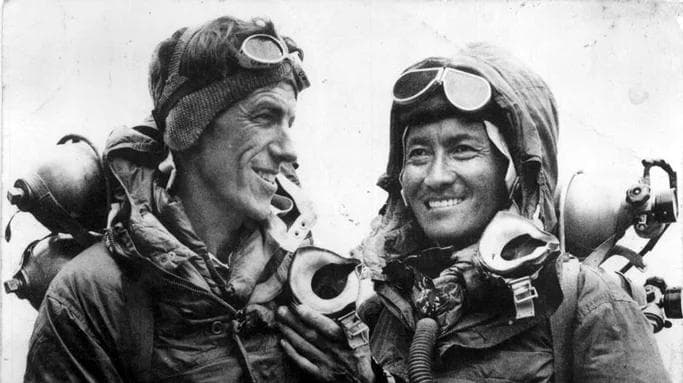
Edmund Hillary and Tenzen
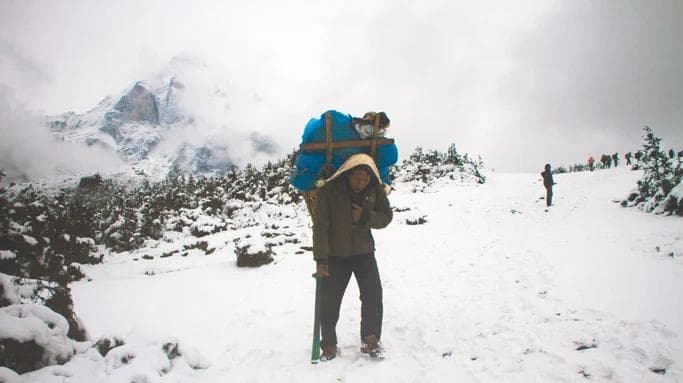
Climbing Everest requires a considerable amount of equipment and supplies and might end in catastrophe if not meticulously prepared. No climber would have been able to conquer Everest if they carried all this essential equipment by themselves. Fortunately, the Sherpas, a Tibetan ethnic group residing in the mountainous regions of Nepal, have been there to help climbers and adventurers for the better part of a century. Sherpas do everything on the mountain, including setting up camp, fixing ropes in place, helping change oxygen bottles, and carry the necessary climbing kit up the mountain. They take the heaviest loads and often pay the highest prices while attempting to fulfill their tasks. Over the years, many Sherpas have disappeared on the mountain, never to be seen again. While scuffle between Sherpas and some Western mountaineers received global attention just a few years ago, no media outlets report when Sherpas fall to their death. There are also many grim stories about Sherpas who were left to die on the mountain while serving clients. Most notoriously, the Nazi climbing team in 1939 put on their skis and abandoned their Sherpas when a storm hit.
Blog image
The greatest challenge for mountaineers climbing Mount Everest is the extremely high altitude. The oxygen level at the summit is one-third of that at sea level. Thus, it is nearly impossible for people to climb without supplementary oxygen. Altitude sickness can strike at as low as 2,500 meters, and the human body struggles to adapt as a person ascend to greater heights. One may feel dizziness, experience low blood pressure, or have trouble breathing. Eventually, if not promptly treated, it would lead to certain death. The same can't be said about Sherpas. According to oral history, Sherpas migrated to northeastern Nepal from bordering Tibet in the 15th century to escape ongoing civil wars. To avoid conflict with locals, they settled in the uninhabited uplands reaching 4,500 meters above sea level. After centuries of living at high altitudes, their bodies have evolved to survive in an oxygen-limited environment. Their hearts can utilize glucose, and their lungs have increased efficiency in low oxygen altitude. Thus, people of the Sherpa ethnicity deal at relative ease with the physical challenges posed by climbing some of the world's highest peaks.
Blog image
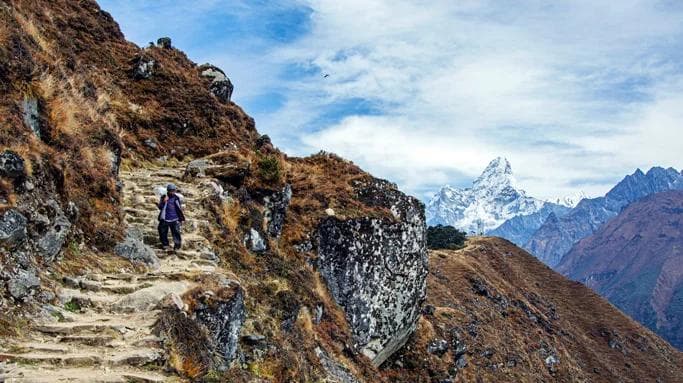
However, despite their mountain climbing gift, Sherpas had not attempted to scale the region's mountains, which they worship, until the last century. As adventurers began arriving to challenge the country's famous peaks since the 1920s, the Sherpas found themselves working as guides and porters due to their familiarity with the terrain. The first Sherpa to reach the top of Mount Everest was Tenzing Norgay. His parents were yak-herders in a village near Everest, who struggled to feed their 13 children. Tenzing ran away from home twice as a teenager, first to Kathmandu and then to Darjeeling, India, which marked the starting point for mountain climbing expeditions to the eastern Himalayas at the time. There he first saw foreign climbers and was intrigued by their passion. While most Sherpas feared to scale the great peaks, other than a way to making a living, Tenzing aspired to become a professional mountaineer, not just a porter. He received his first opportunity to attempt Everest at 19 as part of Eric Shipton's 1935 expedition. He took part in several other failed attempts over the years, including the 1952 Swiss expedition, where he made it within 250 meters of the summit, the highest that anyone had ever been. His group only turned back due to a shortage of equipment – no sleeping bags, no stove, and no enough drinking water to keep at such a high altitude for the night, and were thus forced to revert to basecamp.
Blog image
Inspired by the near-success of the Swiss, the British organized a large expedition the following year. Tenzing led the team of Sherpas and attempted to reach the summit for the seventh time. He later told journalists that "Six times I climbed the mountain. The seventh time, I told myself I cannot fail." The expedition chose two climbing pairs to climb to the top. The first pair was Tom Bourdillon and Charles Evans, while the second included Edmund Hillary and Tenzing Norgay. The first group nearly made it, coming within 100m of the summit, but they turned back, running out of oxygen. Tenzing and Hillary set out the next day. They survived a freezing night on the mountain and reached the South Summit, now known as the Hillary Step, by 9 am. At about 11:30 am on May 29th, 1953, the climbers became the first humans to arrive at the peak of Mount Everest. The news of their success spread across the world. Queen Elizabeth II knighted Hillary but awarded Tenzin with the lesser British Empire Medal due to him not being a Commonwealth citizen.
Blog image
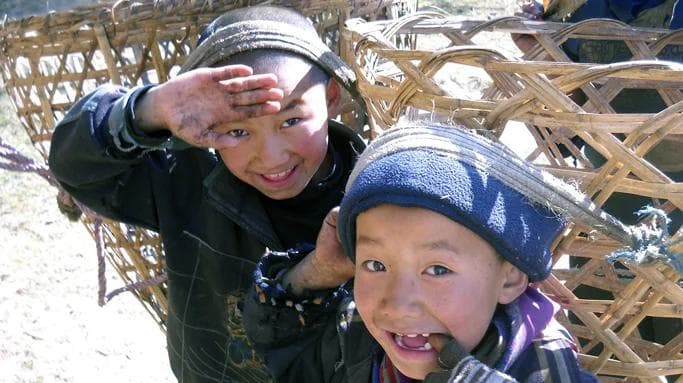
Since Hillary and Norgay's historic climb, Mount Everest has become the ultimate goal for adventurers to push their boundaries and their claim to fame. Sherpa climbing guides have helped thousands of mountaineers to fulfill their dream. While Tenzin Norgay made history, Apa Sherpa broke the world record in 2011 after claiming his 23rd summit of Mount Everest. The nearest non-Sherpa record belongs to David Hahn, who achieved his 14th summit. Apa survived an avalanche at the age of three months with his mother. Although he wanted to become a doctor, he was forced to give up on his dream after his father died. He took up the responsibility to take care of his five siblings and left school to work as a porter for mountaineering expeditions at only 12. Working primarily as a kitchen boy, he only reached the summit at age 30. He repeated the feat almost every year after, becoming Everest's top guide and earning the nickname "Super Sherpa." Now retired and living in Utah, Apa returns every year to his hometown in the Himalayas to provide financial aid to schools and show children from the Sherpa minority that they have other options in life. He once said in an interview, "Sherpas take great risks in the mountains to earn a living for their families because they can't take up any other jobs. My main goal is to ensure children don't have to climb, as we did, in the future."
Blog image
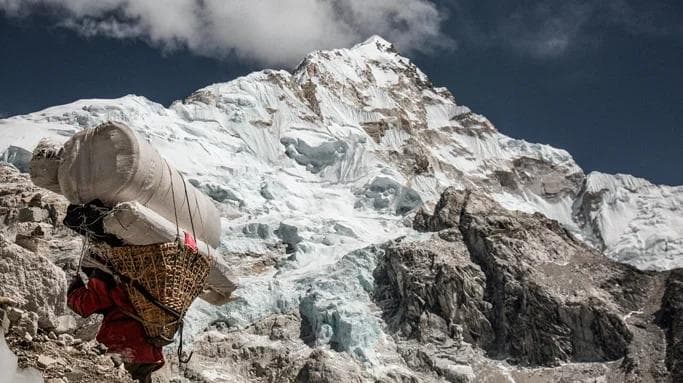
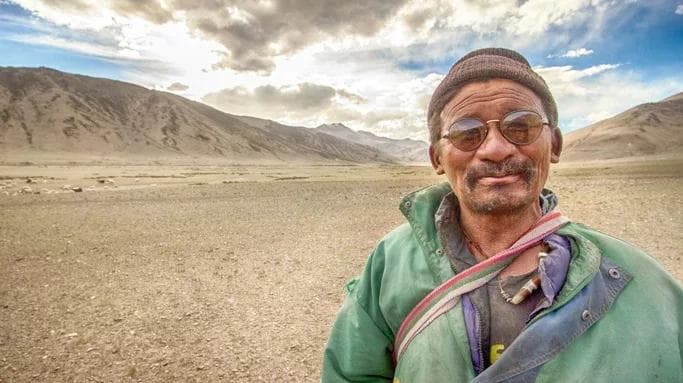
Indeed, working as a Sherpa on Everest is one of the riskiest jobs in the world. On top of avalanches and snowstorms, they must endure collapsing crevasses, frostbites, and winds that can blow you off the mountain. They then have to survive the infamous death zone above an altitude of 8,000 meters, where oxygen levels drop too low to sustain human life for a lengthy period. The summit of Everest is at 8,848 meters, making the death zone inevitable. The bravest Sherpas of Everest take the job known as Icefall doctors. They attach ropes and ladders in the Khumbu Icefall, where house-sized slabs of ice hang and sometimes fall. These Sherpas spend up to 16 hours a day in the Icefall, while the climbers only pass through it for a very short time. Despite all the risks, most Sherpas go on an expedition twice a year as it is the only way to take their families out of poverty. It is hard for Sherpa youth to continue their studies beyond the primary level because their remote villages are connected to the rest of the country by only gravel footpaths. As most of them don't have any education, they take the only available high-paying jobs- porters and mountain guides. Experienced guides who take climbers to the top of Everest make $8,000, while porters or cooks at the camps average at $3,000 during their three months of work. That's a considerable amount compared with Nepal's $1,035 annual per capita income.
Blog image
However, this life-changing pay may no longer encourage the younger generation of Sherpas to work in the mountains. A Sherpa working in Everest is nearly ten times more likely to die than a commercial fisherman, the most dangerous nonmilitary job in the United States. No service industry in the world so frequently kills or mutilates its workers for the amusement of paying clients. Kaji Sherpa, a 39-year-old senior climber, lost 16 of his colleagues in the 2014 avalanche. The team was there to prepare a path for their clients, fixing ropes on the ice field. He told the press that he would never set foot on Everest again and work as a farmer instead. After the loss of so many lives at once, the Sherpa community in the Himalayas refused to work anymore. The revolt has stoked disarray in the government, with the tourism minister flying to the base camp to defuse anger. The government promised to force guiding agencies to increase their life insurance policies for Sherpas from $10,000 to $15,000. However, this sum is still not a hefty amount for a family that lost its breadwinner, so climbers sometimes fundraise to help as well. Helicopters are also being used more often to perform high-altitude rescues of Sherpas. Rescues are paid through government-mandated insurance policies, but sometimes local outfitters pay the difference in costs. In 2015, a magnitude 7.8 earthquake struck Nepal and triggered another massive avalanche, killing ten Sherpas at Everest Base Camp. Due to consecutive incidents, many Sherpas are now investing much of their income for their children's education so that they wouldn't have to follow their fathers' footsteps up the mountains.
Blog image
Most veteran Sherpas admit that they wouldn't have become mountain guides if they had the opportunity to find other well-paying jobs. But it is hard for the Sherpas to walk away from the climbing industry, which has turned many poor men into rather rich people. With many foreign climbers giving the impression that climbing Everest is not as hard as one would expect, increasing numbers of inexperienced climbers do take on the challenge of tackling Everest every year. Climbers with no experience and proper fitness level make the job of Sherpas harder than it already is. Some famous Sherpa mountain guides stated that overcrowding of tourists should be stopped. However, the coronavirus pandemic proved that their livelihoods would be at severe risk without these tourists. Obviously, most Sherpas have little to no education or skills in other fields, so they depend solely on their climbing and mountain survival skills. When tourists' arrivals halted last year, the Sherpas' financial and food security went downhill. Nepal is responding to the growing humanitarian crisis by officially opening its borders to vaccinated travelers in an attempt to generate incomes nationwide, but no less so, to support Sherpa communities high in the Himalayas. Most Sherpas are now hoping to see the tourists again, and despite the hurdles and challenges, to once again take their icepicks and crampons and ascend the peaks that put food on their plates, but that could, at a careless second, take their lives.

Share this article

Blogs

Welcome to the Trips @ Asia Travel articles!

Lunar new year

How Asian countries celebrate Lunar New Year

From late-January to mid-February, China, South Korea, Vietnam, Mongolia, and many other Asian countries celebrate the Lunar New Year or Spring Festival. The holiday sees the world's largest annual human migration as hundreds of millions of people take a journey back home, bringing the global economy to a halt and causing a crazy traffic load. It is an annual headache for retailers and importers overseas who rely on Asia as all factories shut down. While all countries that celebrate New Year emphasize family reunions, specific celebrations and rituals encompassing the holiday are unique in each nation.

How Asian countries celebrate Lunar New Year - See more
Early morning, November 1347, Alfano Damiani woke up to the sound of Alasia, his 5 years old daughter’s heavy coughs. He gushed through the door, seeing her struggling for every breath, barely alive. He took to the streets of Sicily screaming aiuto, aiuto, only to find dozens of others hysterically running the streets, in hope for any assistance they could get. Horrified, Alfano ran back in only to see Alasia taking her last breath before she closed her eyes. Forever.

The plague that changed the world

Father abandoned child, wife husband, one brother another; for this illness seemed to strike through the breath and sight. And so they died. And none could be found to bury the dead for money or friendship. Members of a household brought their dead to a ditch as best they could, without priest, without divine offices ... great pits were dug and piled deep with the multitude of dead. And they died by the hundreds both day and night ... And as soon as those ditches were filled more were dug ... And I, Agnolo di Tura ... buried my five children with my own hands. And there were also those who were so sparsely covered with earth that the dogs dragged them forth and devoured many bodies throughout the city. There was no one who wept for any death, for all awaited death. And so many died that all believed it was the end of the world.

The plague that changed the world - See more
Taiwan Private tour

Taiwan Private Tours – A Custom-Made Trip for You

When Portuguese sailors observed the island of Taiwan in the 16th century, they called it ‘Formosa,’ which means ‘beautiful island’. No words or images can best describe and prove how beautiful Taiwan really is, as it is best experienced and explored when you’re actually there. To enjoy a more immersive experience, consider booking one of those custom Taiwan private tours. That way, the itinerary can be tailored according to the activities and experiences you want.

Taiwan Private Tours – A Custom-Made Trip for You - See more
Vietnam trip

Here’s What No One Tells You About Vietnam Private Tours

Vietnam is a country that is full of tourist destinations, stunning scenery, exciting natural wonders, delicious food, and relaxing experiences—and the best way to enjoy your holiday here is to book a Vietnam private tour. If you want to experience everything Vietnam has to offer, then a private tour can give you that satisfaction. And yes—it’s well worth the money. Some people worry about costs when in fact, a custom tour can offer so much more value.

Here’s What No One Tells You About Vietnam Private Tours - See more
Naadam

Know the Best Place to Experience Naadam in Mongolia

Are you planning to participate and watch the nation'sbiggest national holiday, Naadam? You may want to consider buying a Mongolia vacation package instead of taking the DIY route. Trips@Asia will help you pick destinations where you can taste and experience this traditional festival best. They will even arrange everything, including your itinerary, accommodation, domestic flights, private transportation, transfers, entrance fees, and meals so you can stay comfortable while enjoying the trip.

Know the Best Place to Experience Naadam in Mongolia - See more
The first time in Mongolia

Unexpected Things for First-Time Visitors in Mongolia To Notice

If there is any country in the world that will still surprise even the most well-travelled travelers, that’s Mongolia. So, if you are still pondering whether or not you should book a Mongolia vacation package, you better make up your mind now. This landlocked nation is slowly opening its gates to more tourists and is beginning to attract people from all over the world. Book that vacation while you can still see the untouched and preserved beauty of this part of the world.

Unexpected Things for First-Time Visitors in Mongolia To Notice - See more
Mongolia

Mongolia Vacation Packages – Be Captivated by the Beauty of Mongolia

As the landlocked country opens up to the world, Mongolia is attracting more and more people to its beauty and uniqueness. There are various Mongolia vacation packages that promote the colorful culture and distinct way of life of the nomads. A trip to this country is surely worth investing in. If you are pondering what experiences you will enjoy when you visit, then take a look at the following popular Mongolia vacation packages.

Mongolia Vacation Packages – Be Captivated by the Beauty of Mongolia - See more
Bhutan trip

Bhutan Private Tours – Things to Do in Bhutan

Bhutan is a landlocked country that stretches between the Himalayan southern slopes to the north and the southern savannas and grasslands. Known as the ‘world’s happiest country’, its culture is predominantly influenced by Tibet, with the official language being Tibetan dialect and the religion as Tibetan Buddhism. Tibetan feudalism has also greatly influenced the history of Bhutan, and the fortified monasteries known as Dzongs still stand and are being used today. The best way to experience everything the country has to offer is with custom Bhutan private tours.

Bhutan Private Tours – Things to Do in Bhutan - See more
Hiking tour

Hiking Tours Asia – Enjoy Exciting & Exclusive Destinations in Asia

Hiking Tours Asia – Enjoy Exciting & Exclusive Destinations in Asia For the adventurous and nature-lover, hiking is a great way to discover and explore many different places. It makes reaching your destination feel more rewarding after an exciting journey traversing varied terrain. So, if you are looking to discover Asia in a different way, consider booking a hiking tour with a reputable and trustworthy travel company. Hiking tours in Asia will take you through some of the most exclusive and exciting destinations in the continent. Amazing trails and paths with breathtaking sights and memorable sounds await you and your companions with custom tour packages available to ensure that all the places you want to see can be covered.

Hiking Tours Asia – Enjoy Exciting & Exclusive Destinations in Asia - See more
Asian Cultural tour

Cultural Tours in Asia – Insight into the Way of Life of the Local People

Cultural Tours in Asia – Insight into the Way of Life of the Local People There is nothing like Asian culture, especially when you have the opportunity to behold the one-of-a-kind art, learn every country’s cultural perceptions, and get to know the way of life of the people. For a better way to get acquainted with the Asian state of mind, consider signing up for custom cultural tours in Asia. A tour package could take you through Asia’s art scene and bring you to see and learn about iconic cultural monuments. The objective of these trips is to provide an insight into the culture, understand its origins, and how it translates into the daily life of both rural and city folk.

Cultural Tours in Asia – Insight into the Way of Life of the Local People - See more
South Korea tour

Korea Private Tours – Interesting Facts about Korea

Whether it’s your first or nth time visiting South Korea, you may want to experience the country in a more intimate way with a private tour. Korea private tours are popular with discerning travelers looking to travel more comfortably without the stress. Traveling this way will give you more opportunities to immerse yourself into the amazing culture through personalized activities and the places you want to see and experience, without the uninteresting stops. Moreover, it will give you more control over what to see and do, whether you’re traveling alone, with a small group, or with a special someone.

Korea Private Tours – Interesting Facts about Korea - See more
Asian the best hiking trips

The Best Asia Hiking Tours That You Must Try

The Best Asia Hiking Tours That You Must Try Asia is home to a plethora of national landmarks and highest mountains on the planet, making it a very popular destination for adventure junkies. If you love trekking, then you should join an Asia hiking tour. Exploring this continent by foot is simply the best. It allows you to discover its culture and will make you appreciate your journey even more. This list includes some of the must-try hiking destinations on the continent and explains why people from around the globe travel thousands of miles to hit the trails there.

The Best Asia Hiking Tours That You Must Try - See more
Northern Vietnam trip

Champa: The Forgotten Kingdom of Vietnam

Champa: The Forgotten Kingdom of Vietnam The Kingdom of Champa appeared out of nowhere and disappeared as if it had never been here. It left behind a rich cultural heritage, including thousands of relics, temples, and monuments across Vietnam and Cambodia, two of Asia's most popular destinations. Yet, many who traveled in the region heard very little, if anything, about this kingdom.

Champa: The Forgotten Kingdom of Vietnam - See more
Tibet independence

Tibet: A Century-long Struggle for Independence

Tibet: A Century-long Struggle for Independence By the end of the 19th century, China's influence began to diminish in Tibet after the British took over neighboring India. With the Qing dynasty on the verge of collapse, British India sent a frontier commission to Tibet in 1903 to establish diplomatic ties, or more bluntly, to conquer the region.

Tibet: A Century-long Struggle for Independence - See more
Nepal trekking

Mysteries behind the Nepalese royal massacre

Mysteries behind the Nepalese royal massacre On June 2, 2001, news of a tragic event spread across Nepal that soon threw the whole country into chaos. Ambulances transported 15 members of the royal family from the Narayanhiti Palace to the military hospital the night before. Nine, including King Birendra, his wife, and two children, were shot dead. Crown Prince Dipendra was formally proclaimed king while in a coma, but died just three days later. His death marked the extinction of the main branch of the royal family.

NepalRoyal family
Mysteries behind the Nepalese royal massacre - See more
Silk Road

Chinese Muslims: Hui and Uyghur people

Chinese Muslims: Hui and Uyghur people Islam is an officially recognized religion of China. The traders along the Silk Road brought the faith to the country, which spread quickly among its people. Today, about 25 million Muslims live in the country, which represents 1.6 percent of its population.

Chinese Muslims: Hui and Uyghur people - See more
Tibet

Is Dalai Lama Leader of Tibet?

Is Dalai Lama Leader of Tibet? On March 17 of 1959, three squads, each consisting of 10 men, slipped through the walls of Norbulingka while everyone slept. Among them was the 14th Dalai Lama, Tenzin Gyatso, disguised as a soldier. He turned around and looked at Norbulingka, his summer palace. Then 23, he probably didn't know he would never see it again.

Tibet Dalai Lama
Is Dalai Lama Leader of Tibet? - See more
Cambodia

Cambodian Genocide: Pol Pot's reign of terror

Cambodian Genocide: Pol Pot's reign of terror In the 2000s, I visited Tuol Song or Hill of Poisonous Trees. The walls of this old school, located on a hilltop, were adorned with pictures of Cambodians tortured to death. While I was looking at their gloomy faces, the laughter of an American girl disturbed my focus. The contrast between the suffering of the victims and her cheerfulness filled my eyes with tears.

Cambodia
Cambodian Genocide: Pol Pot's reign of terror - See more
Han River

South Korea: Miracle on the Han River

South Korea: Miracle on the Han River On the morning of May 16, 1961, South Koreans woke up to political turmoil. The army took the hills around the capital with tanks and artillery, threatening to fire government installations. They had soon installed General Park Chung-hee as a de facto ruler. What awaited the new leader was a torn-down nation, suffering through the aftermath of the Korean War that claimed the lives of 2 million people and left millions in poverty.

South Korea
South Korea: Miracle on the Han River - See more
everest

China and Nepal finally agree on Mount Everest height

In a sign of their increasingly close ties, China and Nepal have agreed at last on the height of Mount Everest, after more than a decade of disagreement and dispute. Earlier this month, the two countries made a joint announcement regarding the new measure of the world's highest peak, which sits at Nepal's border with China in the Himalayas. A recent statement declared that Everest is currently standing at 8,848.86 meters or about 29,032 feet. In the aftermath of a dreadful 2015 earthquake, geologists speculated that several Himalayan peaks, including Mount Everest, have possibly shrunk. However, the new measurement is nearly a meter higher than the formerly accepted altitude.

Everest
China and Nepal finally agree on Mount Everest height - See more
Asia Pacific and China

China & Asia-Pacific: The Largest Trade Deal in History

Earlier this month, leaders from 15 Asia-Pacific nations signed a historic deal that would reduce trade barriers in an area covering a third of the world population and a similar share of the global economy. The new free-trade zone is larger than the US-Mexico-Canada Agreement and the European Union. Economists estimate it can add $200 billion annually to the global economy by 2030. The Regional Comprehensive Economic Partnership (RCEP) brings together China, Japan, and South Korea in a trade deal for the first time while also including 10 Southeast Asian countries – Brunei, Cambodia, Indonesia, Laos, Malaysia, Myanmar, the Philippines, Singapore, Thailand, and Vietnam. Australia and New Zealand are the only non-Asian partners on board, while the US sits on the sidelines.

China
China & Asia-Pacific: The Largest Trade Deal in History - See more
Mongolian Language and Culture

The war you never heard of

Unlike the Tibetans or Muslim Uyghurs, China’s ethnic Mongol population has long been seen as a stereotypical “model minority”, due to the lack of visible instances of interethnic conflict. Earlier this month, however, Chinese Mongols, most of whom reside in the Inner Mongolia autonomous region, have strongly protested in opposition to Beijing’s plans to reduce the prominence of the Mongolian language. The government plans to replace Mongolian with Mandarin as the primary medium of teaching for math, history, politics, and literature, although Mongolian language lessons will continue.

Mongolian Language
The war you never heard of - See more
Forbidden City

Lost treasures of a Two-Headed Dragon

Serving as the official seat of 24 emperors of the Ming and Qing dynasties, the Forbidden City holds the world's most extensive collection of Chinese art, consisting of roughly 1.8 million items. Yet the most valuable imperial relics, considered as an epitome of Chinese fine art, are found in Taiwan. Nearly 90 percent of Taipei's National Palace Museum collection was accumulated by the emperors themselves, despite the collection being only a third as big as that of Beijing.

China
Lost treasures of a Two-Headed Dragon - See more
Cambodia

The Khmer Rouge Monsters

The Communist Party of Kampuchea (CPK), often referred to as the Khmer Rouge, ruled Cambodia from 1975 to 1979. In the course of the four years of its reign, Khmer Rouge enacted one of the worst mass killings of the 20th century. The party introduced policies that overlooked human rights and quickly turned the country into a huge detention center, which later became a graveyard for an estimated two million people.

Cambodia
The Khmer Rouge Monsters - See more
Golden Eagle - The Wings of the Kazakh

Golden Eagle - The Wings of the Kazakh

The Altai Mountains, one of the most secluded areas in the world, covers a vast area of over 16,000 kilometers, forming an impregnable barrier against globalization with its permanently snow-covered peaks that rise above 4,500m. This land of undiscovered beauty and wilderness is home to the Kazakhs, who have been preserving the ancient tradition of falconry to these days. Although falconry is still popular in many countries, including the United Kingdom and Saudi Arabia, hunting with golden eagles is exclusively a Kazakh practice.

Golden EagleWestern Mongolia
Golden Eagle - The Wings of the Kazakh - See more
Dalai Lama

Dalai Lama- A short lived position

In a modern world where celebrities like Justin Bieber and Beyonce are idolized, the 14th Dalai Lama has managed to become an icon, recognized all over the world as a spokesman for Buddhism. Due to his phenomenal rise to stardom, people often mistake him as THE Dalai Lama. As a matter of fact, most of us don’t know that he is the most recent in a historical linage of spiritual leaders of the Gelug sect in Tibetan Buddhism. Historically, Sonyam Gyatso, the third Dalai Lama was the first one to bear the title in his lifetime. The title Dalai Lama, meaning “Ocean of Wisdom”, was granted to him in 1578 by Altan Khan, a descendant of Genghis Khan who was ruling a large chunk of Central Asia at the time. Since then, till now, his two predecessors and all successors have been carrying the notorious title.

Dalai lama
Dalai Lama- A short lived position - See more
Bhutanese mask dance- Cham dance

Bhutanese mask dance

Hailed as the Land of the Thunder Dragon, Bhutan is the only independent country in the world, where Tibetan Buddhism is an official religion of the state. Opening to the outside world only in the 1970s, television and the internet did not come to Bhutan until 1999. Hence, it comes as no surprise that the core values of this small Himalayan nation are strongly influenced by Buddhist ideology.

BhutanCham dance
Bhutanese mask dance - See more
Hong Kong private tour

China's Rise to Superpower

China’s paramount leader Xi Jinping said "Over the past 70 years, the Chinese people, with perseverance and strenuous efforts, have achieved rapid development which owes the world. Harsh poverty, which has haunted the Chinese people for thousands of years, will soon become a thing of the past, a great miracle in human history!" on the occasion of the 70th anniversary of the country. But the country’s grandeur history tells a whole different story!

ChinaHong Kong
China's Rise to Superpower - See more
The railway is featured in the Guinness Book of Records for its total length, the number of stations and for the fastest pace of construction, taking only 26 years to complete. By its main route, passengers can travel 9,289 km from Moscow to Vladivostok in just seven days. Its secondary branch, known as the Trans-Mongolian, follows an ancient tea-caravan route from Russia’s capital to Beijing.

The railway that changed the course of history

The Trans-Siberian Railway The Trans-Siberian Railway is considered as a geostrategic success evenly matched to the building of the Panama channel. The railway is featured in the Guinness Book of Records for its total length, the number of stations and for the fastest pace of construction, taking only 26 years to complete. By its main route, passengers can travel 9,289 km from Moscow to Vladivostok in just seven days. Its secondary branch, known as the Trans-Mongolian, follows an ancient tea-caravan route from Russia’s capital to Beijing.

The railway that changed the course of history - See more
After wandering for days, a man found himself near a large peepul tree. He decided to sit beneath it and meditate upon his questions. Before long, he felt as if he was floating in space, seeing the world from far, far away. He saw himself. And then, he found an answer. This man would come to be known as Buddha. The answers he found would develop into a religion that amassed half a billion believers worldwide, changing its true color in the process.

Buddhism: A Chameleon Faith

After wandering for days, a man found himself near a large peepul tree. He decided to sit beneath it and meditate upon his questions. Before long, he felt as if he was floating in space, seeing the world from far, far away. He saw himself. And then, he found an answer. This man would come to be known as Buddha. The answers he found would develop into a religion that amassed half a billion believers worldwide, changing its true color in the process.

BuddhismReligion
Buddhism: A Chameleon Faith - See more
Buddism, Buddha

Buddhism: What is compassion?

Buddhists committed to the path to enlightenment (nirvana) must equip themselves with wisdom (prajña) and compassion (karuṇā). Wisdom allows the practitioner to see past external appearances and understand the reason behind one's suffering, while compassion helps them empathize with others.

BuddhaBuddhism
Buddhism: What is compassion? - See more
Asia rice field

Travel to Asia

Earth’s biggest and the most populous continent is Asia. It has a population of 4.5 billion and covers 44,579,000 square kilometers (17,212,000 sq mi) including parts of Russia, Kazakhstan and Turkey. Within its regions, a great variety of ethnicity, culture, environment,economy and political systems exist. The Asian Tigers are now shaping the world’s future and thriving to be the next superpowers of the globe. But, on the other hand, there are also many countries that are heavily affected by nagging poverty and rotten corruption.

Asia
Travel to Asia - See more
The breathtaking landscape of Bhutan showcases the harmony between nature and traditional architecture

The Tigers roar again in Nepal

The amazing story on the recovery of the Bengal Tiger population in Nepal

TravelNepal
The Tigers roar again in Nepal - See more
The Nomads of Mongolia with Trips@Asia

The Nomads of Mongolia

CultureMongolia
The Nomads of Mongolia - See more