Cambodian Genocide: Pol Pot's reign of terror
Cambodian Genocide: Pol Pot's reign of terror
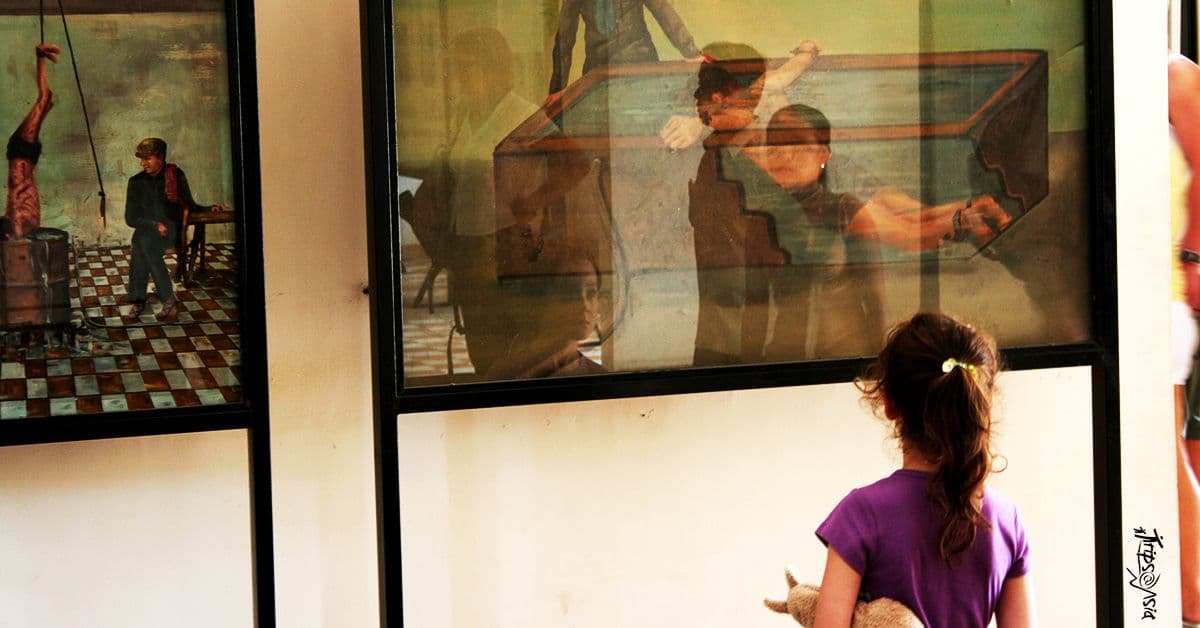
In the 2000s, I visited Tuol Song or Hill of Poisonous Trees. The walls of this old school, located on a hilltop, were adorned with pictures of Cambodians tortured to death. While I was looking at their gloomy faces, the laughter of an American girl disturbed my focus. The contrast between the suffering of the victims and her cheerfulness filled my eyes with tears.
The man responsible for the gruesome Cambodian genocide was Saloth Sar, better known as Pol Pot. Sar was an average student at best. He only received a scholarship to study radio electronics in Paris because his cousin was one of the king's consorts. In 1949, Sar sailed from Saigon to France. As expected, he failed the first end-of-year exams but was allowed to retake them and narrowly passed. At the time, socialist ideology was taking Europe by storm due to Soviet victory in World War II. Sar began meeting his friends in secret to discuss Marxist principles and Cambodian independence. He later admitted that he didn't understand Karl Marx's books but found Stalin and Mao's novels easier to absorb. He also said that Peter Kropotkin's book – The Great French Revolution – left its mark on him. Sar learned from the books that to sustain the revolution, one must ally with both the intellectuals and the working class and that communist society must embody absolute equality.
After decades of being under French control, Indochina fell under Japanese rule during World War II. Although the French took back the region after the war, Indochina's independence movements grew strong enough to fight back. By the 1950s, France was about to lose Vietnam to the People's Army of Vietnam led by Ho Chi Minh. In Cambodia, King Norodom Sihanouk led an international campaign to end colonial rule. Various political movements backed by the C.I.A and the Soviet were operating in Indochina against the French, who was trying to hold onto its colonies while fighting communists at home. In Paris, the Cambodian student body was looking for a volunteer to return to his country to check which rebel group was worth allying. Sar, who just failed for the second time in the final exams and lost his scholarship, volunteered to return to Cambodia. He landed in Saigon in 1953, three years after his departure. Sar spent several months with the guerrillas on the Vietnam-Cambodia border before returning to Phnom Penh. Thus, he informed his friends in Paris that the Khmer Việt Minh, a mixed Vietnamese and Cambodian guerrilla group, was the most promising resistance group. He selected this group because the Khmer Việt Minh had aligned with the Việt Minh, and thus the international Marxist–Leninist movement.
"1954 Youngsters in Viet Minh uniform accompany older members of their family to a military review in Hanoi" by manhhai
The Cambodian student union took his recommendation and joined the Khmer Việt Minh. However, they soon realized that the organization was run and numerically dominated by the Vietnamese, while the Cambodians were mainly given unskilled tasks. Sâr was sent to grow cassava and work in the canteen. There he learned little Vietnamese, and with a little French he learned in Paris, rose to become a secretary of a district commander. In June 1953, after France refused King Sihanouk's demands for independence, he urged his subjects to fight against colonial rule, resulting in a defection of many Cambodian soldiers. Conflict with Vietnam left France unable to control the push for independence. Thus, they relinquished sovereignty over Cambodia in November 1953 before a full-blown civil war.
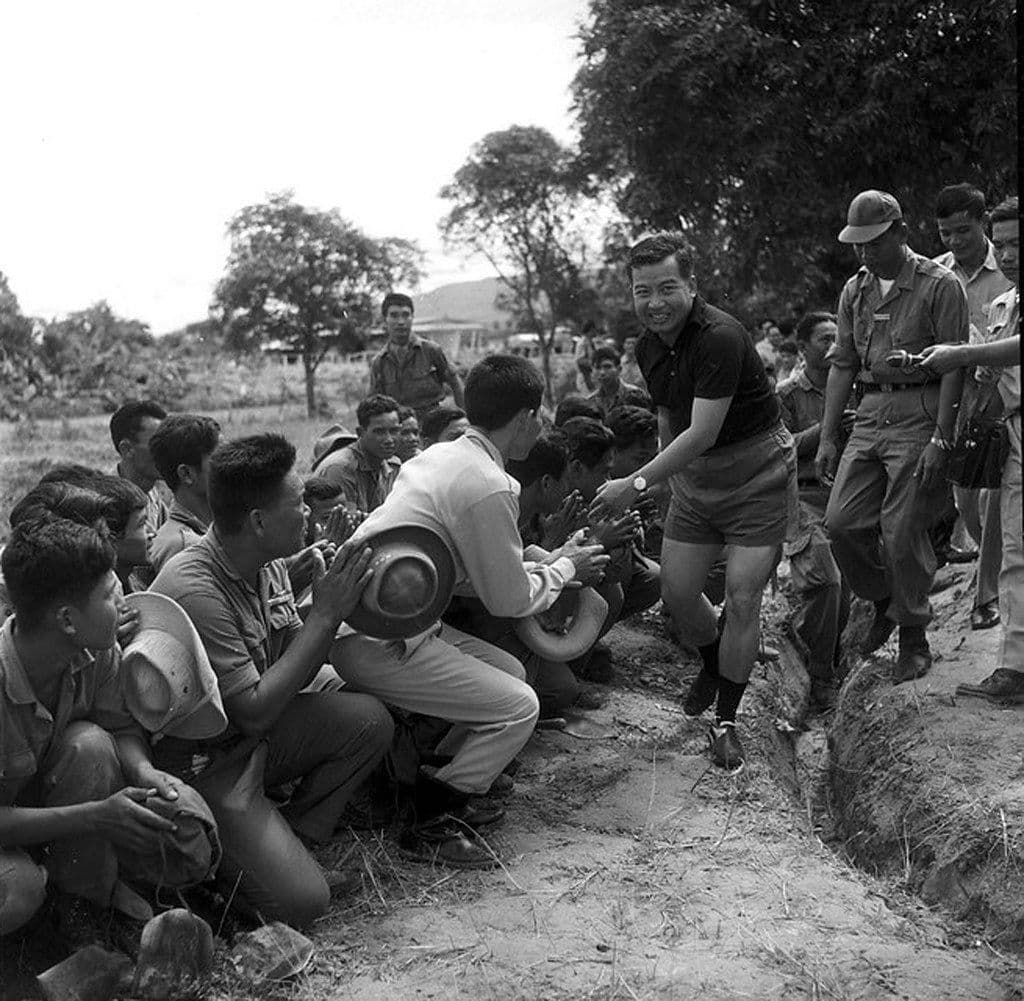
"CAMBODGE - King Norodom Sihanouk" by manhhai
In 1954, the Khmer Việt Minh members retreated to North Vietnam, but Sar and his friends traveled to Phnom Penh. On the way to the capital, he passed by many remote villages. He was impressed with the Agrarian economy of the villages that barely used cash. After settling in Phnom Penh, Sar and his friends formed a Communist Party to compete in the 1955 election. King Norodom Sihanouk passed his throne to his father and established a party of his own. Due to his popularity as a national hero who secured Cambodia's independence, his party won all 91 seats of the new parliament. The hope of the communists to become a significant political opposition faded. The North Vietnamese saw the Sihanouk government as a neutral regime, not allied with the United States. They believed that it would be a barrier against capitalist expansion to southern Vietnam. Therefore the North Vietnamese asked the Cambodian communists not to dispute and go underground. Although unqualified to teach, Sar gained employment teaching history, geography, and French literature at a private school. His pupils recall him as a likable teacher.
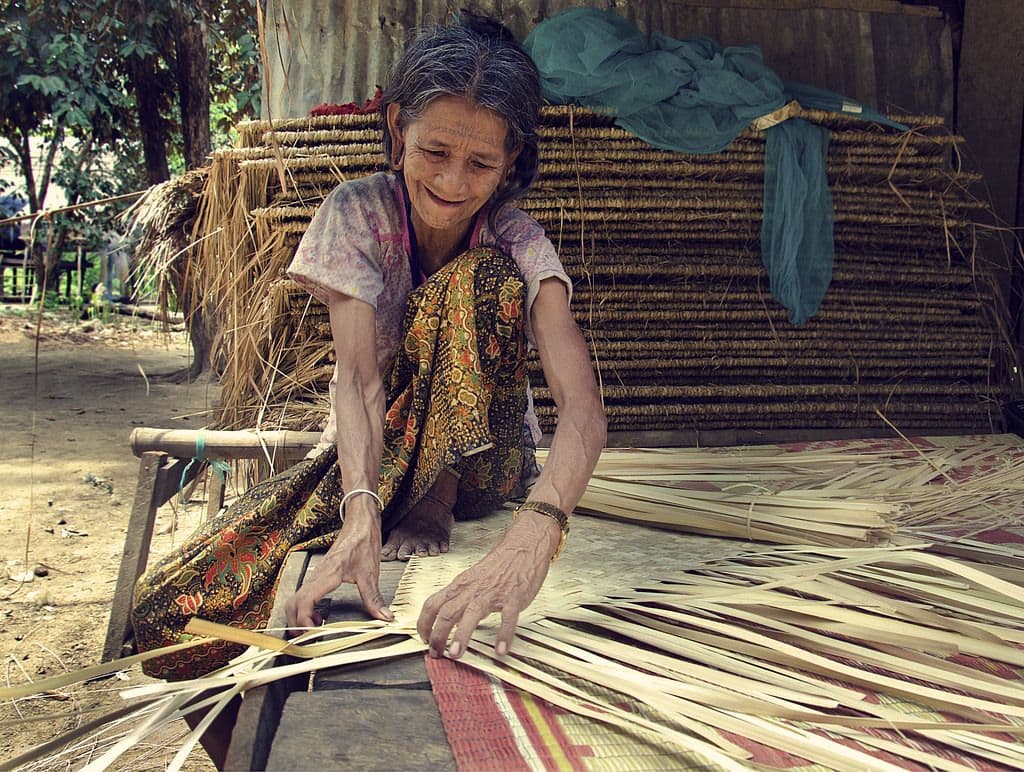
"Weaving through the Ages" by ethan.crowley
For seven years, the communist stayed in the shadows. Finally, at a 1959 conference, they established the Kampuchean Labour Party, based on the Marxist–Leninist model of democratic centralism. Sar became part of a four-person General Affair Committee leading the party. At the same time, King Sihanouk began to eliminate the radical left parties in his country. During the political purge, Samouth, the Labor Party leader, was captured, tortured, and killed. The two other members of the General Affair Committee retired from politics to save their lives. Sar was left alone to lead his party. In 1962, Sihanouk invited 34 left-wing leaders, including Sar, to form a new government. Sar feared that it was a trap, so he fled to the Viet Cong camp near the Vietnamese border. There Sar became a full-time revolutionary.
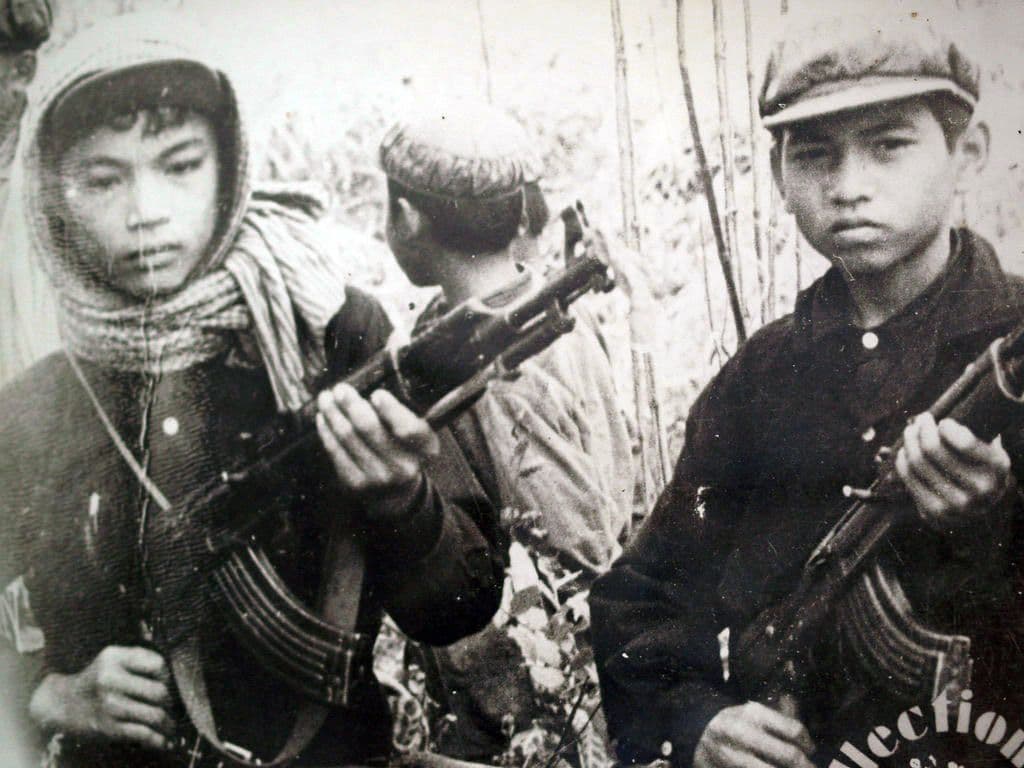
In Phnom Penh, the hunt for left-wing activists continued. Many of Sar's friends joined him in the jungle. In 1964, Sar left the Viet Cong camp to set up a base of his own, Camp 100, from which he supervised his revolutionary movement. There the party leadership assembled to condemn the de-Stalinization initiated by Khrushchev. Khrushchev's liberal reforms continued to shock Asian communist leaders who saw him as a traitor to Marxism-Leninism. The Cambodian then decided that instead of the working class, which Marx intended to lead the revolution, the peasants should lead the rebellion. The workers who lived in the cities were thus declared enemies. In April 1965, Sar left for Hanoi to get the support of the Ho Chi Minh Government. The North Vietnamese, who were busy fighting Americans, sought to avoid a further military confrontation in Cambodia. Ho Chi Minh asked Sar to be patient. Pol Pot later claimed that he came to believe since then that the Vietnamese planned to take over Cambodia.
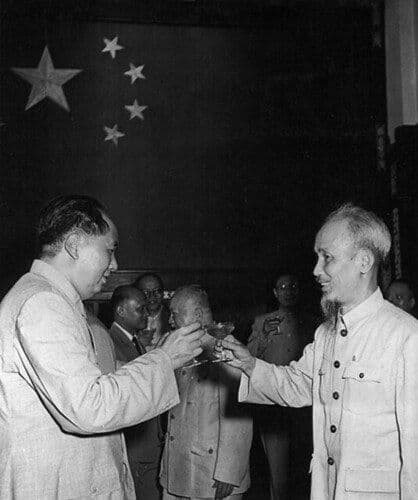
"PEKING 1955 - Mao and Ho" by manhhai
In November 1965, Sar flew from Hanoi to Beijing, where he met with Communist Party officials. He received lessons from the Chinese about class struggles and political persecution. Sar stayed in China during the height of the Cultural Revolution. He saw how the communists forced their ideology on the population. In February 1966, he flew back to Hanoi and, from there, he traveled to his base. Later that year, Sar changed the party name to the Communist Party of Kampuchea, finally revealing their true colors. At that time, Europeans started hearing about the Khmer Rouge - a term created by King Sihanouk to describe Cambodian communists. Sar and his comrades, who now led an army of 2,000 men, asked Ho Chi Minh to supply weapons. The Vietnamese leader again refused to help. Regardless, in 1968, the communist forces attacked a military base in southern Cambodia. The Royal Army responded by dropping bombs on every village that may have supported Sar's army. A civil war broke out across the country after the angry villagers who lost their loved ones in the bombing joined Khmer Rogue.
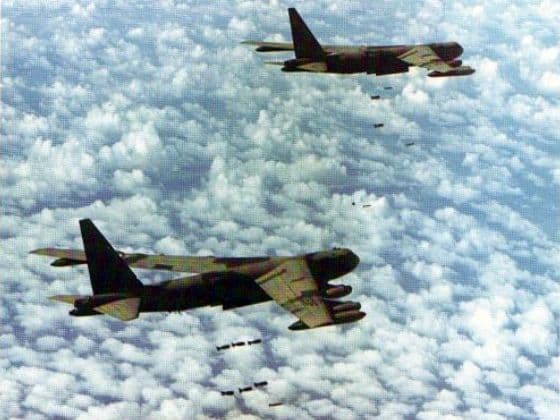
In 1969, President Nixon approved the "Operation Menu," top secret bombings in Cambodia. The bombings came from Nixon's plan to prohibit North Vietnam from shipping supplies to South Vietnam through Cambodia. The American public was not informed of the bombings. Congress and many high-ranking military officials knew nothing of Operation Menu. Over 2.7 million tons of bombs were dropped on Cambodia despite that the Royal government declared neutrality. It almost doubled what the U.S. had used on Japan during World War 2, including bombings in Hiroshima and Nagasaki. The bombs took a heavy toll on the rural population, who soon joined the Khmer Rouge to fight against American imperialism.
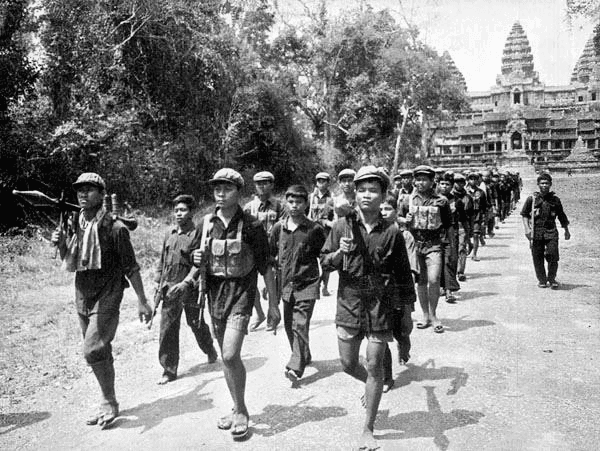
While King Sihanouk was in China meeting prime minister Zhou Enlai, pro-American general Lon Nol overthrew him back home. Sar, who was also in Beijing at that time, was persuaded by the Chinese to help the king. Sihanouk didn't know that Sar led a Communist Party because he only heard of the party's former name – Kampuchean Labour Party. The king established a government in exile in Beijing and declared his support for Sar's party. Hundreds of thousands of peasants from all over Cambodia, who never heard of Sar, joined Khmer Rouge to fight for the king. Sar flew to Hanoi to meet Le Duan, the head of the Vietnamese Communist Party. Sar asked him to supply weapons to overthrow Lon Nol, but not soldiers. However, North Vietnamese used the excuse to invade Cambodia. Sar returned to his camp, where he had 12,000 soldiers. He changes his name to Pol Pot to hide his identity.
Travel to Asia- China's Rise to Superpower
- The railway that changed the course of history
- Unwanted Destiny
- Dalai Lama- A short lived position
- The Nomads of Mongolia
- Bhutanese Mask Dance
- Golden Eagle - The wings of the Kazakh
- The Plague that Changed the World
- The Khmer Rouge Monsters
- Kashmir conflict: India and Pakistan, but why China?
- Lost treasures of a Two-Headed Dragon
- China & Russia: A race for a vaccine
- The war you never heard of
- East Asia wins over COVID-19
- China & Asia-Pacific: The Largest Trade Deal in History
- China and Nepal finally agree on Mount Everest height
- How Asian countries celebrate Lunar New Year
- Buddhism: A Chameleon Faith
- Room 39: North Korea's Secret Coffer
- Did Confucianism help Asia beat coronavirus?
- South Korea: Miracle on the Han River
- Is Dalai Lama Leader of Tibet?
- A cycle of grain that feeds Asia
- The troubled history of modern-Myanmar
- Korean War: Rise and fall of North Korean economy
- Cambodian Genocide: Pol Pot's reign of terror
- Mysteries behind the Nepalese royal massacre
- Sherpas: Heroes of the Himalayas
- Buddhism: What is compassion?
- Tibet: A Century-long Struggle for Independence
- Nenets: The nomadic reindeer herders in Russian Tundra
- Champa: The Forgotten Kingdom of Vietnam
- The Dukha: The Declining Culture of Mongolian Reindeer Herders
- The mysterious case of recent COVID outbreak in Mongolia
- Elephant sanctuaries in Thailand: Should you visit them?
- Chinese Muslims: Hui and Uyghur people
- The Best Asia Hiking Tours You Must Try
- Korea Private Tours – Interesting Facts about Korea
- Cultural Tours in Asia – Insight into the Way of Life of the Local People
- Hiking Tours Asia – Enjoy Exciting & Exclusive Destinations in Asia
- Hiking Tours in Asia - The Best Hiking Spots in China
- Know the Best Place to Experience Naadam in Mongolia
- Unexpected Things for First-Time Visitors in Mongolia To Notice
- Mongolia Vacation Packages – Be Captivated by the Beauty of Mongolia
- Recommendations for the Best Asia Hiking Trips
- Bhutan Private Tours – Things to Do in Bhutan
- Bhutan Private Tour – Get an Opportunity to Feel the Beauty of Bhutan
- Korea Private Tour – Know About Korean Culture
- Taiwan Private Tours – A Custom-Made Trip for You
- 10 Things You Can Do in Your Private Tour of Vietnam
- Here’s What No One Tells You About Vietnam Private Tours
- Nepal is open for international travelers for the first time since COVID-19 pandemic
- The Tigers roar again in Nepal
Cambodian Genocide: Pol Pot's reign of terror
In the 2000s, I visited Tuol Song or Hill of Poisonous Trees. The walls of this old school, located on a hilltop, were adorned with pictures of Cambodians tortured to death. While I was looking at their gloomy faces, the laughter of an American girl disturbed my focus. The contrast between the suffering of the victims and her cheerfulness filled my eyes with tears.
The man responsible for the gruesome Cambodian genocide was Saloth Sar, better known as Pol Pot. Sar was an average student at best. He only received a scholarship to study radio electronics in Paris because his cousin was one of the king's consorts. In 1949, Sar sailed from Saigon to France. As expected, he failed the first end-of-year exams but was allowed to retake them and narrowly passed. At the time, socialist ideology was taking Europe by storm due to Soviet victory in World War II. Sar began meeting his friends in secret to discuss Marxist principles and Cambodian independence. He later admitted that he didn't understand Karl Marx's books but found Stalin and Mao's novels easier to absorb. He also said that Peter Kropotkin's book – The Great French Revolution – left its mark on him. Sar learned from the books that to sustain the revolution, one must ally with both the intellectuals and the working class and that communist society must embody absolute equality.
After decades of being under French control, Indochina fell under Japanese rule during World War II. Although the French took back the region after the war, Indochina's independence movements grew strong enough to fight back. By the 1950s, France was about to lose Vietnam to the People's Army of Vietnam led by Ho Chi Minh. In Cambodia, King Norodom Sihanouk led an international campaign to end colonial rule. Various political movements backed by the C.I.A and the Soviet were operating in Indochina against the French, who was trying to hold onto its colonies while fighting communists at home. In Paris, the Cambodian student body was looking for a volunteer to return to his country to check which rebel group was worth allying. Sar, who just failed for the second time in the final exams and lost his scholarship, volunteered to return to Cambodia. He landed in Saigon in 1953, three years after his departure. Sar spent several months with the guerrillas on the Vietnam-Cambodia border before returning to Phnom Penh. Thus, he informed his friends in Paris that the Khmer Việt Minh, a mixed Vietnamese and Cambodian guerrilla group, was the most promising resistance group. He selected this group because the Khmer Việt Minh had aligned with the Việt Minh, and thus the international Marxist–Leninist movement.
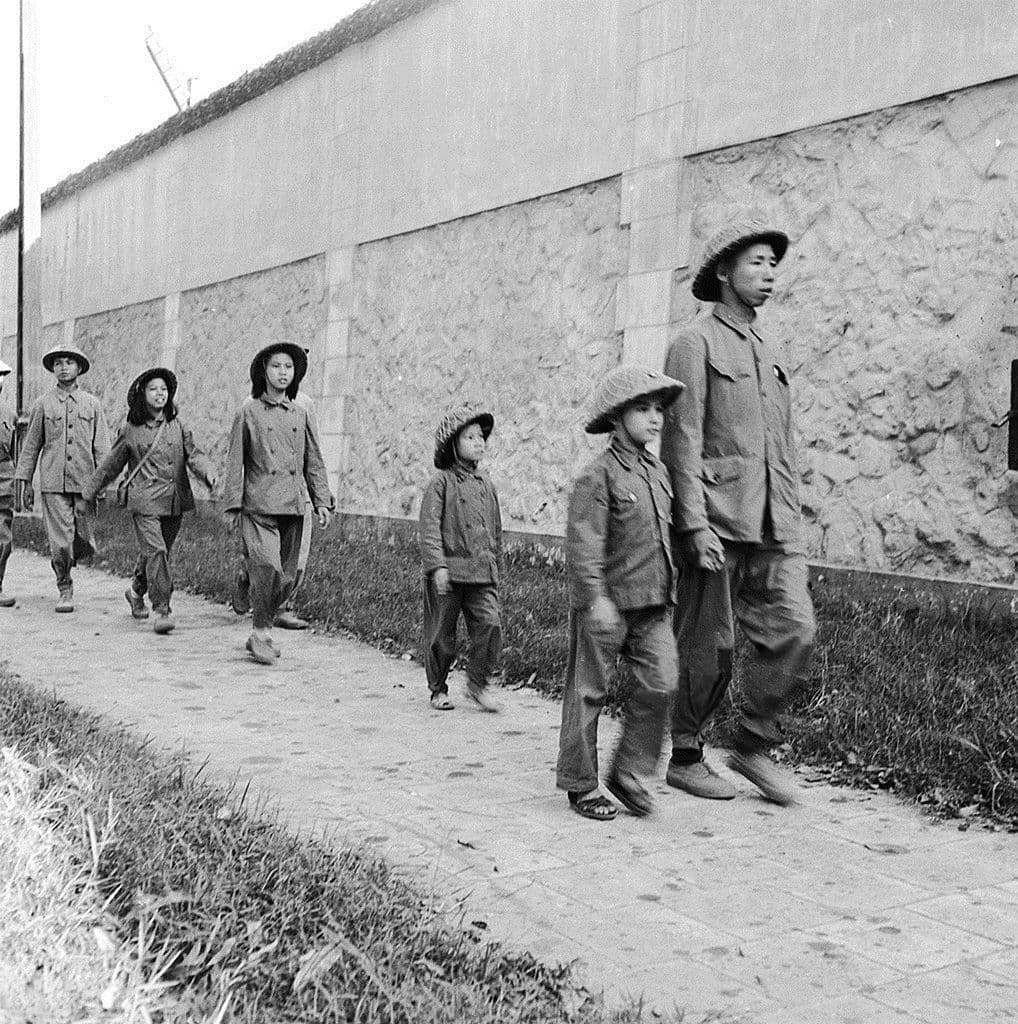
"1954 Youngsters in Viet Minh uniform accompany older members of their family to a military review in Hanoi" by manhhai
The Cambodian student union took his recommendation and joined the Khmer Việt Minh. However, they soon realized that the organization was run and numerically dominated by the Vietnamese, while the Cambodians were mainly given unskilled tasks. Sâr was sent to grow cassava and work in the canteen. There he learned little Vietnamese, and with a little French he learned in Paris, rose to become a secretary of a district commander. In June 1953, after France refused King Sihanouk's demands for independence, he urged his subjects to fight against colonial rule, resulting in a defection of many Cambodian soldiers. Conflict with Vietnam left France unable to control the push for independence. Thus, they relinquished sovereignty over Cambodia in November 1953 before a full-blown civil war.
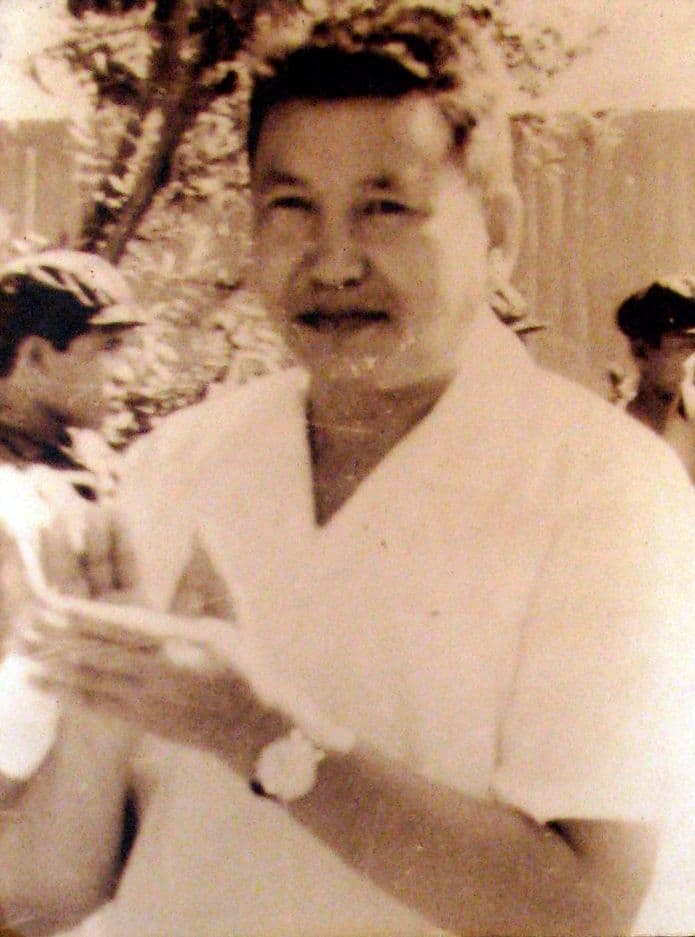
"CAMBODGE - King Norodom Sihanouk" by manhhai
In 1954, the Khmer Việt Minh members retreated to North Vietnam, but Sar and his friends traveled to Phnom Penh. On the way to the capital, he passed by many remote villages. He was impressed with the Agrarian economy of the villages that barely used cash. After settling in Phnom Penh, Sar and his friends formed a Communist Party to compete in the 1955 election. King Norodom Sihanouk passed his throne to his father and established a party of his own. Due to his popularity as a national hero who secured Cambodia's independence, his party won all 91 seats of the new parliament. The hope of the communists to become a significant political opposition faded. The North Vietnamese saw the Sihanouk government as a neutral regime, not allied with the United States. They believed that it would be a barrier against capitalist expansion to southern Vietnam. Therefore the North Vietnamese asked the Cambodian communists not to dispute and go underground. Although unqualified to teach, Sar gained employment teaching history, geography, and French literature at a private school. His pupils recall him as a likable teacher.
"Weaving through the Ages" by ethan.crowley
For seven years, the communist stayed in the shadows. Finally, at a 1959 conference, they established the Kampuchean Labour Party, based on the Marxist–Leninist model of democratic centralism. Sar became part of a four-person General Affair Committee leading the party. At the same time, King Sihanouk began to eliminate the radical left parties in his country. During the political purge, Samouth, the Labor Party leader, was captured, tortured, and killed. The two other members of the General Affair Committee retired from politics to save their lives. Sar was left alone to lead his party. In 1962, Sihanouk invited 34 left-wing leaders, including Sar, to form a new government. Sar feared that it was a trap, so he fled to the Viet Cong camp near the Vietnamese border. There Sar became a full-time revolutionary.
In Phnom Penh, the hunt for left-wing activists continued. Many of Sar's friends joined him in the jungle. In 1964, Sar left the Viet Cong camp to set up a base of his own, Camp 100, from which he supervised his revolutionary movement. There the party leadership assembled to condemn the de-Stalinization initiated by Khrushchev. Khrushchev's liberal reforms continued to shock Asian communist leaders who saw him as a traitor to Marxism-Leninism. The Cambodian then decided that instead of the working class, which Marx intended to lead the revolution, the peasants should lead the rebellion. The workers who lived in the cities were thus declared enemies. In April 1965, Sar left for Hanoi to get the support of the Ho Chi Minh Government. The North Vietnamese, who were busy fighting Americans, sought to avoid a further military confrontation in Cambodia. Ho Chi Minh asked Sar to be patient. Pol Pot later claimed that he came to believe since then that the Vietnamese planned to take over Cambodia.
"PEKING 1955 - Mao and Ho" by manhhai
In November 1965, Sar flew from Hanoi to Beijing, where he met with Communist Party officials. He received lessons from the Chinese about class struggles and political persecution. Sar stayed in China during the height of the Cultural Revolution. He saw how the communists forced their ideology on the population. In February 1966, he flew back to Hanoi and, from there, he traveled to his base. Later that year, Sar changed the party name to the Communist Party of Kampuchea, finally revealing their true colors. At that time, Europeans started hearing about the Khmer Rouge - a term created by King Sihanouk to describe Cambodian communists. Sar and his comrades, who now led an army of 2,000 men, asked Ho Chi Minh to supply weapons. The Vietnamese leader again refused to help. Regardless, in 1968, the communist forces attacked a military base in southern Cambodia. The Royal Army responded by dropping bombs on every village that may have supported Sar's army. A civil war broke out across the country after the angry villagers who lost their loved ones in the bombing joined Khmer Rogue.
In 1969, President Nixon approved the "Operation Menu," top secret bombings in Cambodia. The bombings came from Nixon's plan to prohibit North Vietnam from shipping supplies to South Vietnam through Cambodia. The American public was not informed of the bombings. Congress and many high-ranking military officials knew nothing of Operation Menu. Over 2.7 million tons of bombs were dropped on Cambodia despite that the Royal government declared neutrality. It almost doubled what the U.S. had used on Japan during World War 2, including bombings in Hiroshima and Nagasaki. The bombs took a heavy toll on the rural population, who soon joined the Khmer Rouge to fight against American imperialism.
While King Sihanouk was in China meeting prime minister Zhou Enlai, pro-American general Lon Nol overthrew him back home. Sar, who was also in Beijing at that time, was persuaded by the Chinese to help the king. Sihanouk didn't know that Sar led a Communist Party because he only heard of the party's former name – Kampuchean Labour Party. The king established a government in exile in Beijing and declared his support for Sar's party. Hundreds of thousands of peasants from all over Cambodia, who never heard of Sar, joined Khmer Rouge to fight for the king. Sar flew to Hanoi to meet Le Duan, the head of the Vietnamese Communist Party. Sar asked him to supply weapons to overthrow Lon Nol, but not soldiers. However, North Vietnamese used the excuse to invade Cambodia. Sar returned to his camp, where he had 12,000 soldiers. He changes his name to Pol Pot to hide his identity.
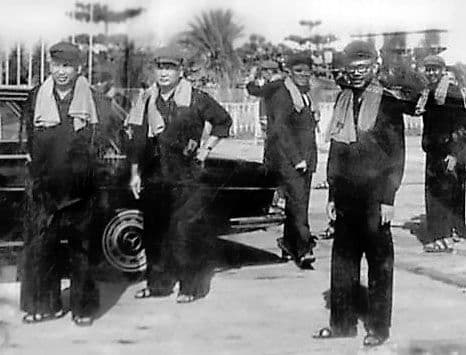
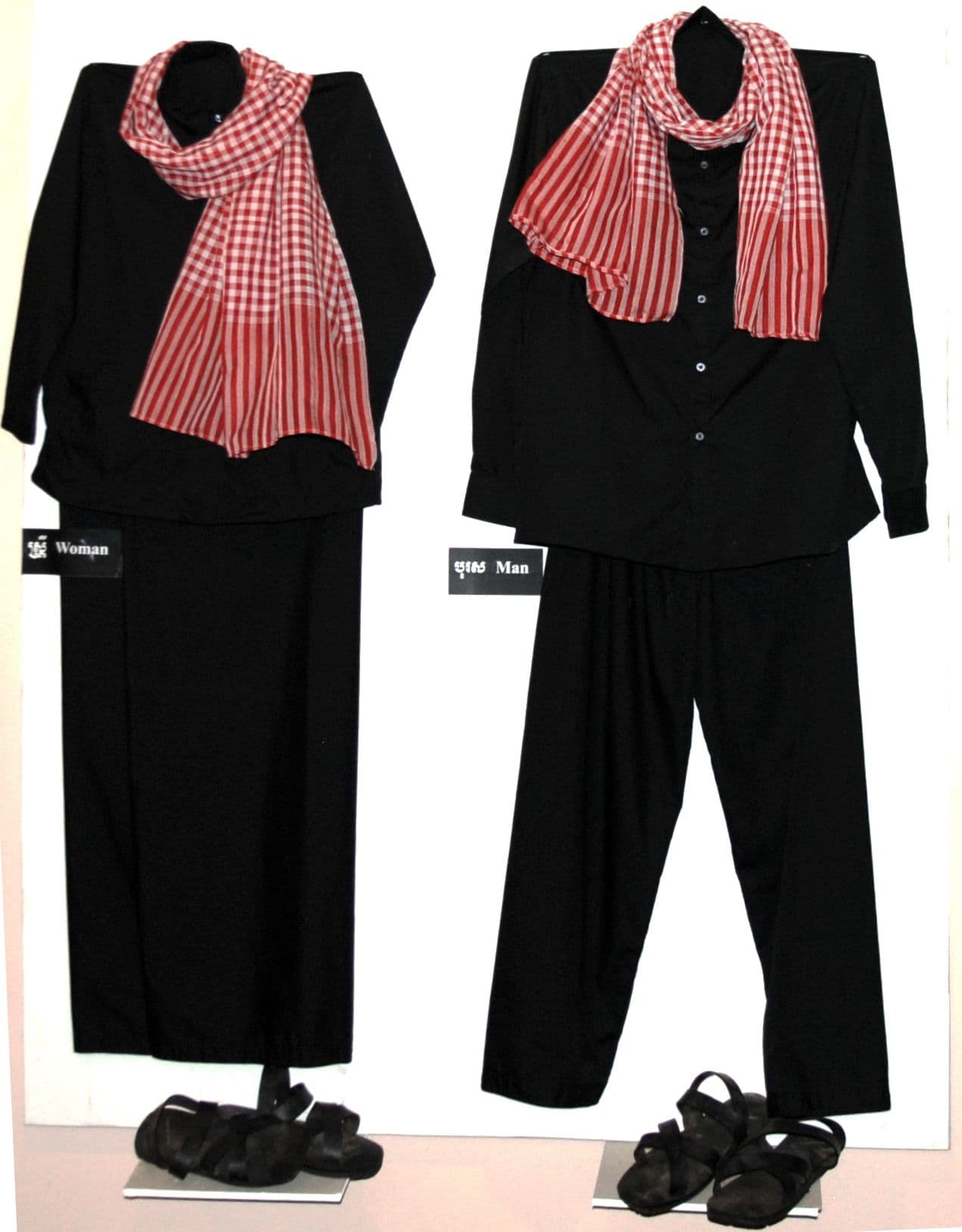
By the end of 1970, half of Cambodia's territory was already under communist control with the North Vietnamese assistance. Around this time, Pol Pot set up the Khmer Rouge's ideology. Like North Korea's "Juche" concept, Pol Pot believed that Cambodia is an independent nation, so it must remain isolated from the outside world and rely solely on itself. He wished to transform the country into his unique vision of an agrarian utopia – where no one uses money, runs a private business, and owns a property. All citizens, including the leaders themselves, had to wear black costumes, which were the traditional revolutionary clothes. The lands were confiscated from the few wealthy farmers and distributed to the landless peasants, who were the majority. No one could go outside their farming cooperative. In the evening, the cooperative members would gather to learn about communism and have a discussion. The villagers would criticize themselves, slam each other, and punish those who contributed the least to the community. Punishments included torture and even execution.
In 1973 Pol Pot announced collectivization. From then on, there will be no more private property. The fields, agricultural equipment, and animals are the state property. Many villagers opposed the idea and slaughtered their animals so that they wouldn't become community property. Some 60,000 Cambodians fled the communist-controlled areas, which by this time included much of the country. As time went on, Pol Pot took more extreme steps to establish communism. The execution of those considered enemies would occur every day. The bodies were thrown in the fields to serve as fertilizers. People eventually stopped using the term "I" and would often say "we" in conversations. Pol Pot's Cambodia became a slave state. The regime banned all leisure activities and punished people for showing even the slightest affection, humor, or pity. Everyone would dress in uniforms, show no facial expression, and work to death in the rice fields.
On April 17, 1975, the Cambodian capital Phnom Penh fell to Khmer Rouge. Their leader, Pol Pot, became the Head of State. The Khmer Rouge celebrated their victory by executing 800 army officers and officials from the previous regime. At noon that day, the evacuation of the city began. Nearly 2.5 million city residents were evacuated on the pretext that the Americans were about to bomb. Even hospitalized patients were forced to flee. The Khmer Rouge soldiers lied to the citizens that they could return in three days. No one knew that they were leaving permanently.
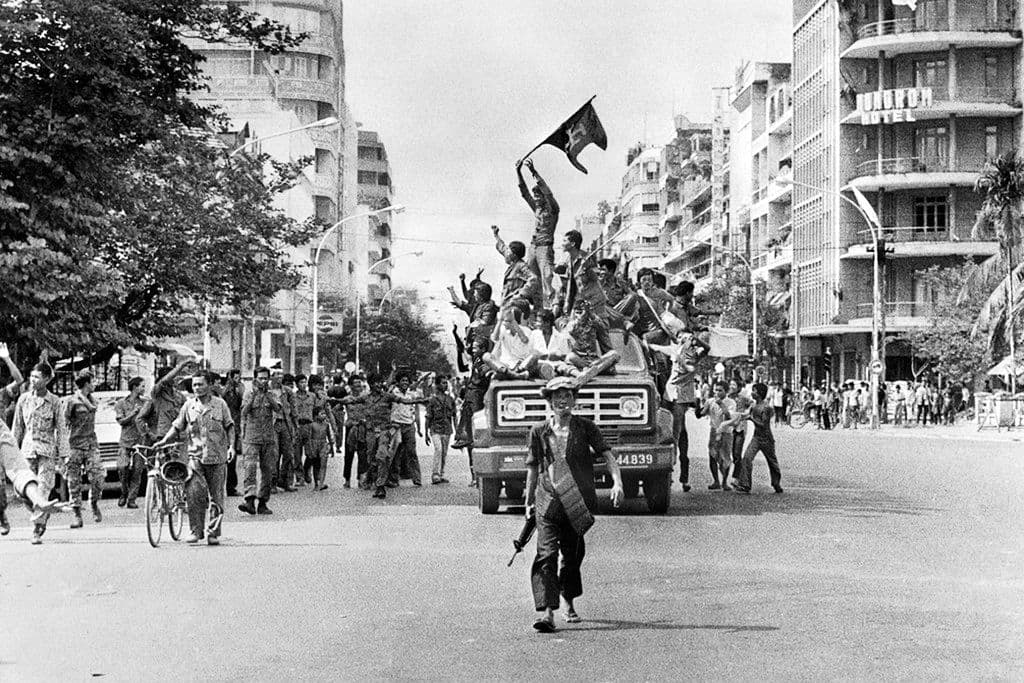
The deportation took place in the hottest month of the year. Over 20,000 people died of exhaustion during the grueling journey on foot. The mass deportation was an idea of Pol Pot, who decided long ago that the Cambodian revolution would rely on peasants, not the workers. He branded the workers as enemies of communism who shall be banished to the labor camps in the rural collectives. Two weeks after the Khmer Rouge took Phnom Penh, Vietnam's capital Saigon fell to the North Vietnamese communists. The Vietnam War, the longest war of the 20th century, finally ended.
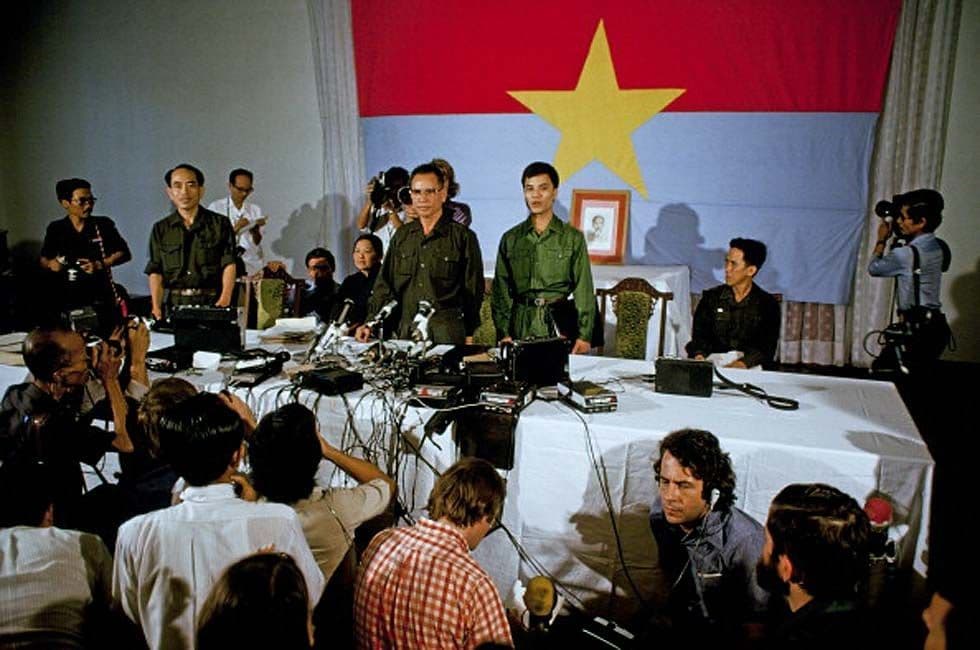
Meanwhile, King Sihanouk remained in his position as the exiled prime minister and Pol Pot's ally. While Western countries recognized Lon Nol's government, China saw Sihanouk as Cambodia's legitimate ruler. Five days after the fall of Phnom Penh, Pol Pot held a secret meeting with the monarch. They met inside the Silver Pagoda near the Royal Palace, where the kings and queens attend prayers. Pol Pot would later turn it into his residence. At the meeting, both sides agreed to aim for food self-sufficiency in rice to reduce Cambodia's dependence on its neighbors. The motto behind this decision was, "If we have rice, we have everything." They set the production target at 3 tons per hectare (10 acres), an impossible number by any means, as Cambodia was producing an average of 0.7 tons per hectare at the time. Pol Pot's dream was to mechanize 80% of Cambodian agriculture within ten years and industrialize the nation within 20 years. From then on, the whole country worked to achieve Pol Pot's unrealistic vision, inspired by the "Great Leap Forward" of Mao Zedong. The entire population of Cambodia – 7.5 million people – was mobilized for two tasks. The first was to establish a massive irrigation system by diverting rivers and construct dams to control the flow of water across the country. The latter was to cultivate rice.
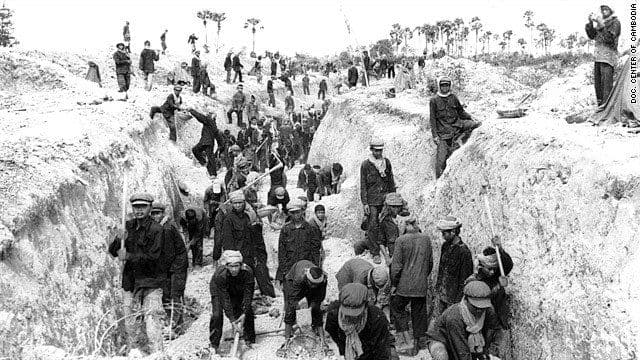
During Pol Pot's visit to Beijing, Mao praised his inspiring vision and lectured him on continuing revolution under the proletariat dictatorship. On the other hand, at another meeting in August 1975, Chinese Premier Zhou Enlai warned Pol Pot about the danger of radical movement towards communism, urging them not to repeat China's mistakes that had caused havoc. Regardless, from 1975 to 1974, Cambodia turned into a nation of slaves. Commune leaders would cut from the worker's food to increase production. They would also report bogus numbers and punish those who weren't working hard enough on the fields. Taking a five-minute break was ending up in execution. As anyone who seemed to be intellectual was killed, there was no one to oversee the dams and irrigation canals. The watering system soon collapsed due to improper management.
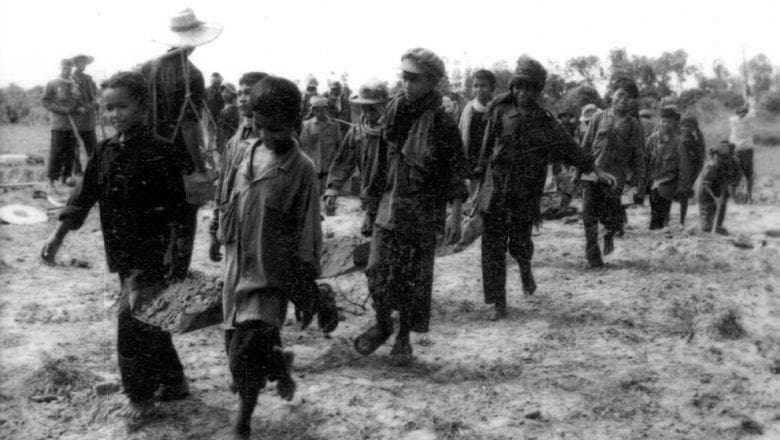
The only good decision Pol Pot made was not to destroy the ancient Khmer Empire's royal palaces (the most famous among them is Angkor Wat). It made him unique among other communist dictators who would primarily demolish cultural sites to abolish all ties to the past. Although not scholarly, Pol Pot must have known that the empire had accomplished great things. The situation in the communes was getting worse. The party representatives separated kids from their parents and kept them in children's homes where counselors brainwashed them. Women were also separated from men. People would eat in a large dining room, where children, women, and men sat separately. Revolutionary slogans and songs were played all day through speakers placed in the center of the camps. Mottos included, "The sick are victims of their own imagination" and "If someone is very hungry, Angkar will take him where he will be stuffed would food."
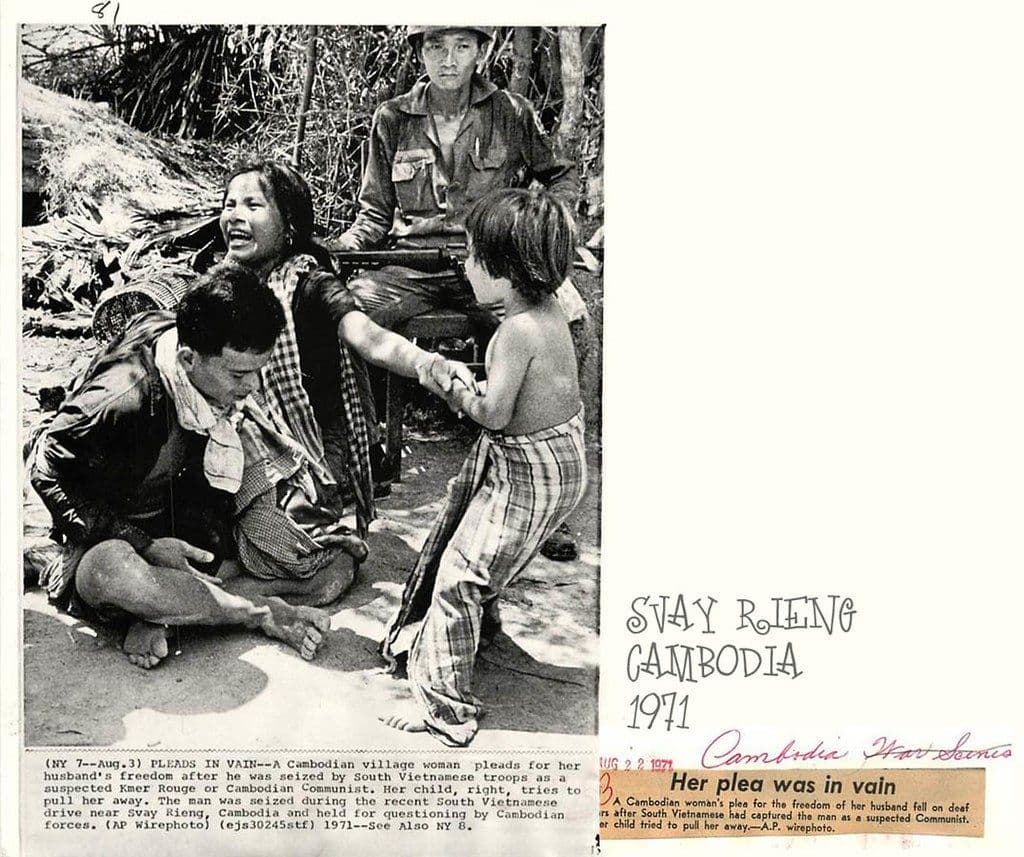
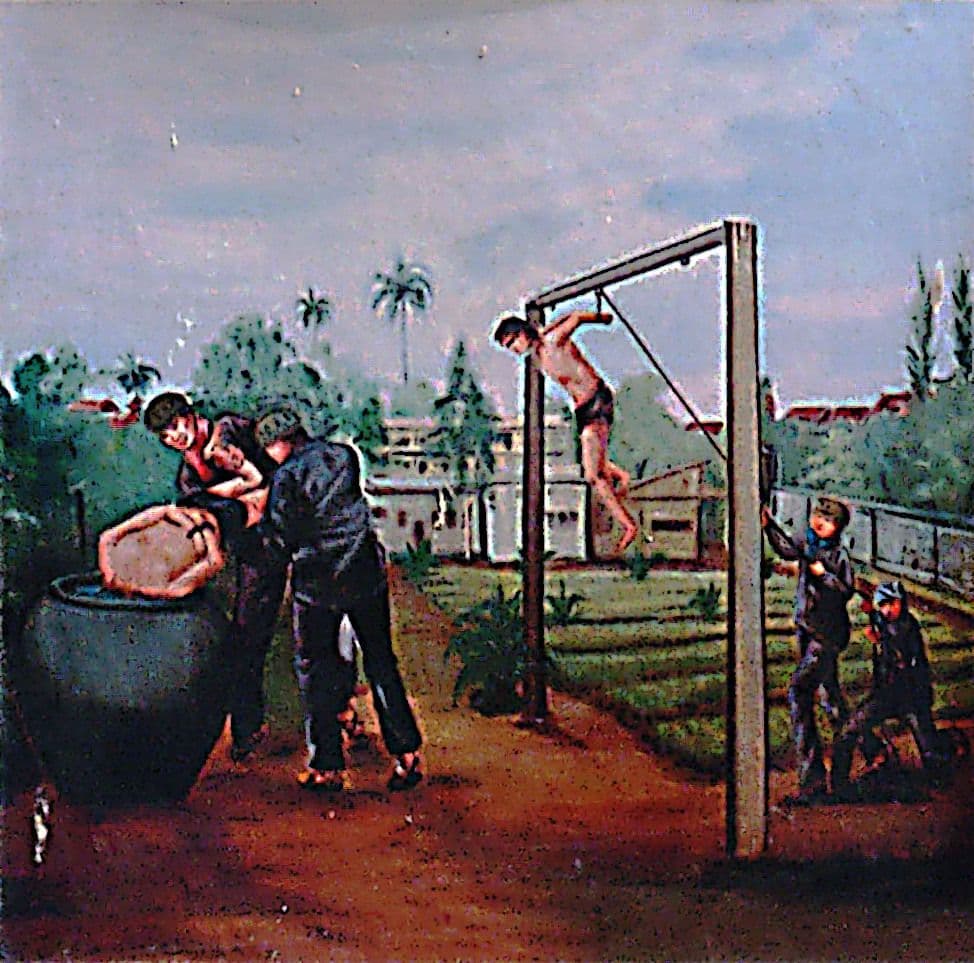
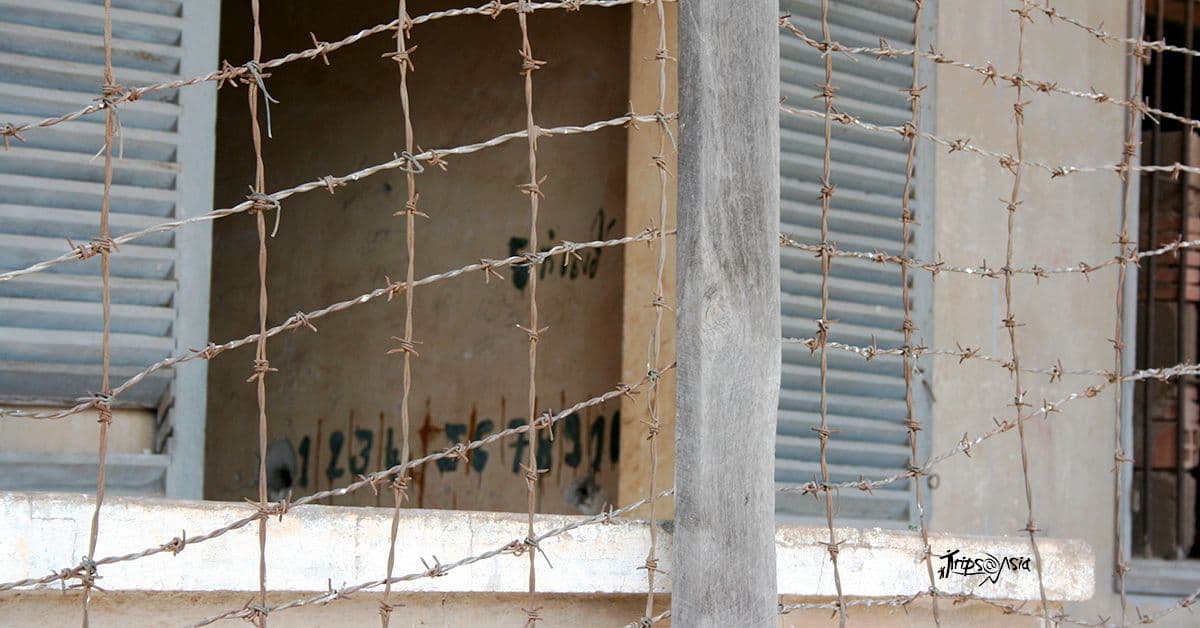
In Phnom Penh, a former high school was turned into an S-21 prison to interrogate and torture the regime's enemies. All officials from Lon Nol's administration were brought there. Each inmate had to give the names of their accomplice. Anyone whose name was mentioned would be arrested, increasing the number of inmates. Pol Pot, like any other dictator, was paranoid. After eliminating the previous regime's officials, he started purging every few months to eliminate rivals within his party. Pol Pot would accuse senior party members of attempting to assassinate him. The accused were sent to the torture prison along with their family and friends.
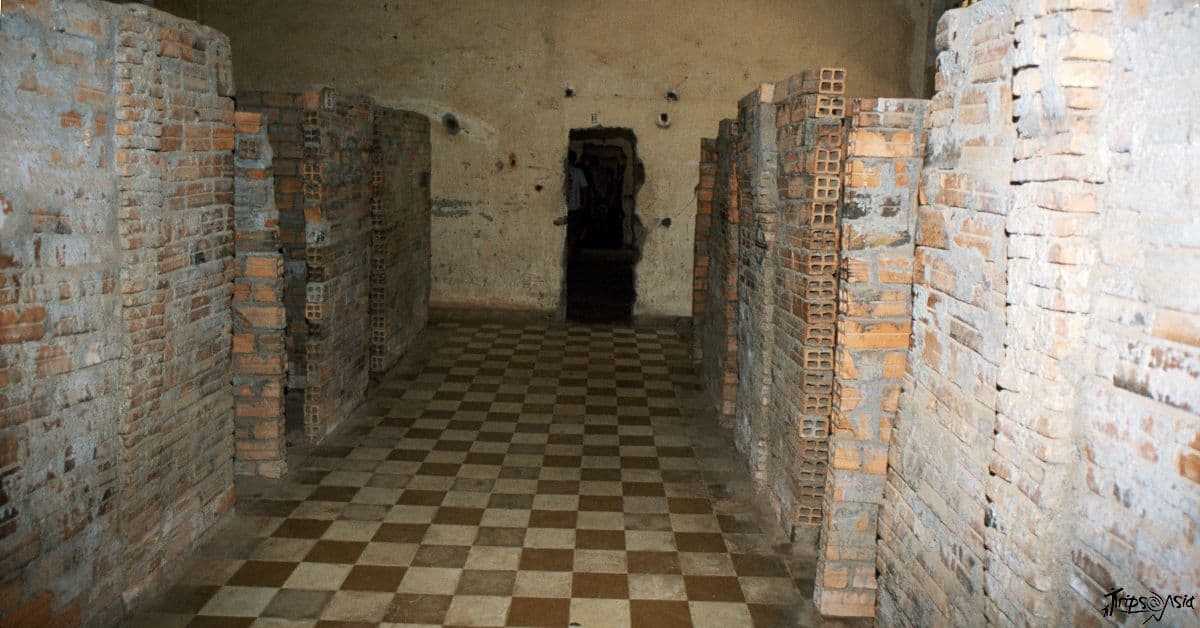
Thus, the S-21 prison continued to receive more inmates. Out of the 20,000 prisoners that entered this facility, only 12 survived. The guards initially buried the dead on prison ground, but they soon ran out of space. Many inmates were then transferred to the Killing Field. There, prisoners were beaten to death by iron rods to save ammunition. The majority of those murdered had never conspired against the regime or attempted to harm Pol Pot. However, the man in charge was Pol Pot, who said, "It is better to kill an innocent by mistake than spare an enemy by mistake." The Khmer Rouge had 196 facilities like S-21, though they were much smaller.
Between 1975 and 1979, nearly 2 million Cambodians were killed. Half of them died from starvation or overwork. It is understandable since the peasants worked on the fields for ten consecutive days and took only one day off. The other half were victims of the political purges who died under torture in facilities like the S-21. Vietnam launched an invasion of Cambodia in late December 1978 to remove Pol Pot, but he escaped to Thailand with his colleagues before their arrival. Soon, the Vietnamese took control of Phnom Penh. They changed the country's name in a communist spirit to the "Cambodian People's Republic" and set up a puppet government. Hun Sen, a former Khmer Rouge soldier who deserted to Vietnam during a political purge, was appointed as a foreign minister.
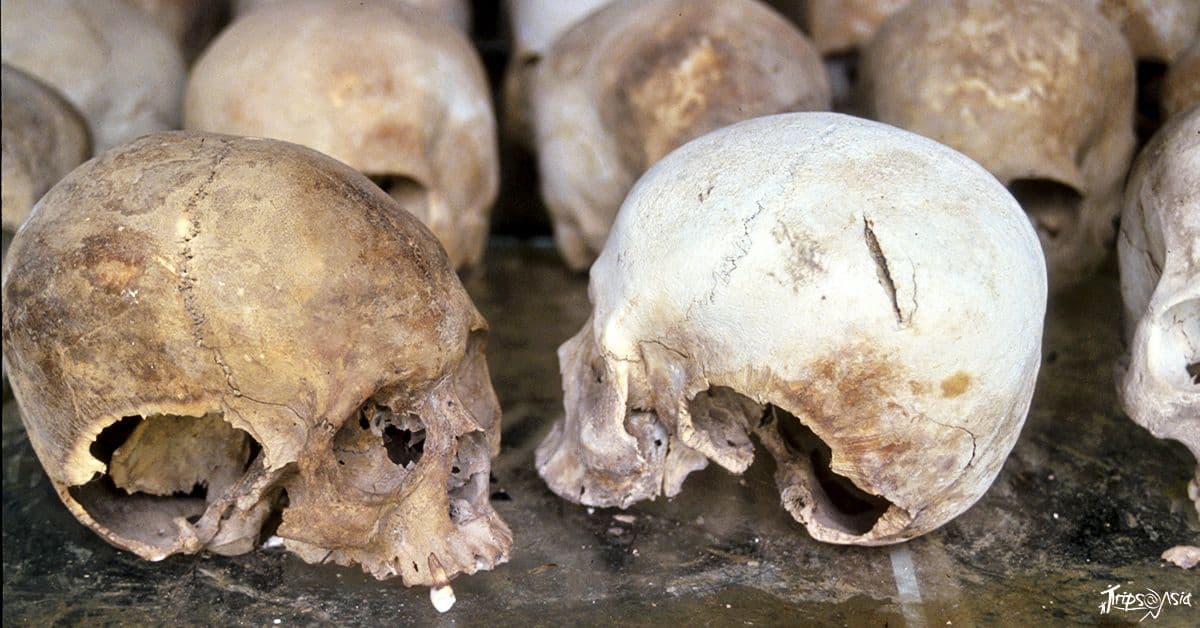
However, Pol Pot didn't sit idle. For his strongholds on the Thai border, he continued to fight the Vietnamese forces. The civil war ensued across the country, forcing nearly 600,000 Cambodians to flee to UN refugee camps in Thailand. At the time, the Cold War was reaching its peak. Vietnam's main ally was the Soviet Union. China provided the Khmer Rouge guerrillas with weapons to halt Soviet ambitions in Southeast Asia. The United States funded the Khmer Rouge to avenge their defeat in the Vietnam War. The US and China's support allowed Pol Pot to form a Triparty Coalition Government in 1982. Through a government in exile, the Khmer Rouge hold onto Cambodia's seat at the UN.
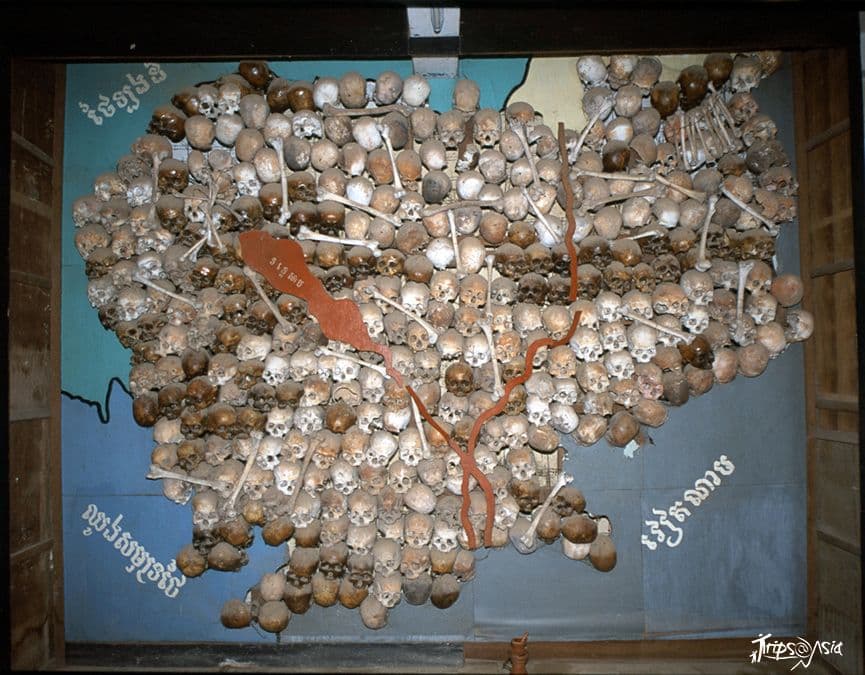
After a decade of skirmishes, the civil war ended in 1989 when the UN commenced a peace talk between two sides. The UN peacekeepers entered the country and stayed there until the 1993 elections. Hun Sen, the former Khmer Rouge soldier who rose to a foreign minister after Pol Pot's defeat, lost the election. However, he refused to accept the results and forced a negotiation to become co-prime minister alongside Norodom Ranariddh, King Sihanouk's son. In the next election, Hun Sen secured a position as a solo prime minister. He quickly removed all political opposition. Since then, he has won five elections and keeps the post of prime minister to this day. For 36 years, Hun Sen ruled Cambodia with no legitimate opposition. Some credit him for bringing economic growth and peace after the devastation caused by the Khmer Rouge regime. Others see him as an authoritarian figure who shows no signs of relinquishing his power any time soon. In 2018, he made international headlines by vowing to rule for ten more years.
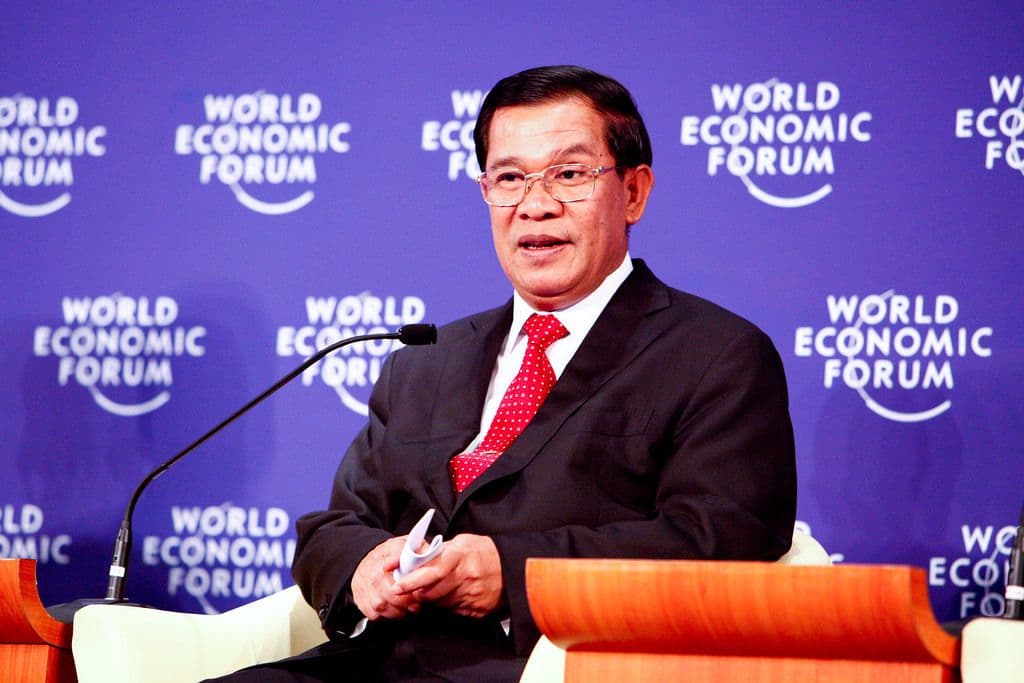
Many rumors circulate about the net worth of Hun Sen and his family. The Global Witness claims that the family holds either share or directly own about 114 private domestic companies with a listed value of $200 million. These companies cover most of the kingdom's key sectors, including energy, mining, trading firms, and telecoms. Hun Sen appointed his family members and friends to the most prominent public service positions, including ministries, army, police, judiciary, and ironically Anti-Corruption Unit. His three sons hold senior posts in the military and the government. The eldest of them, who may be his successor, is a general in the Cambodian army. With his co-prime minister Norodom Ranariddh, Hun Sen requested UN assistance to set up trial proceedings against the Khmer Rouge's senior leaders. However, it was barely a show for Sen to portray himself as a savior of Cambodia who ended Pol Pot's tyranny. In truth, he was not motivated to punish those involved since many of his collaborators were former officers of the bloody regime. Hun Sen himself was a division commander of Khmer Rouge until 1977.
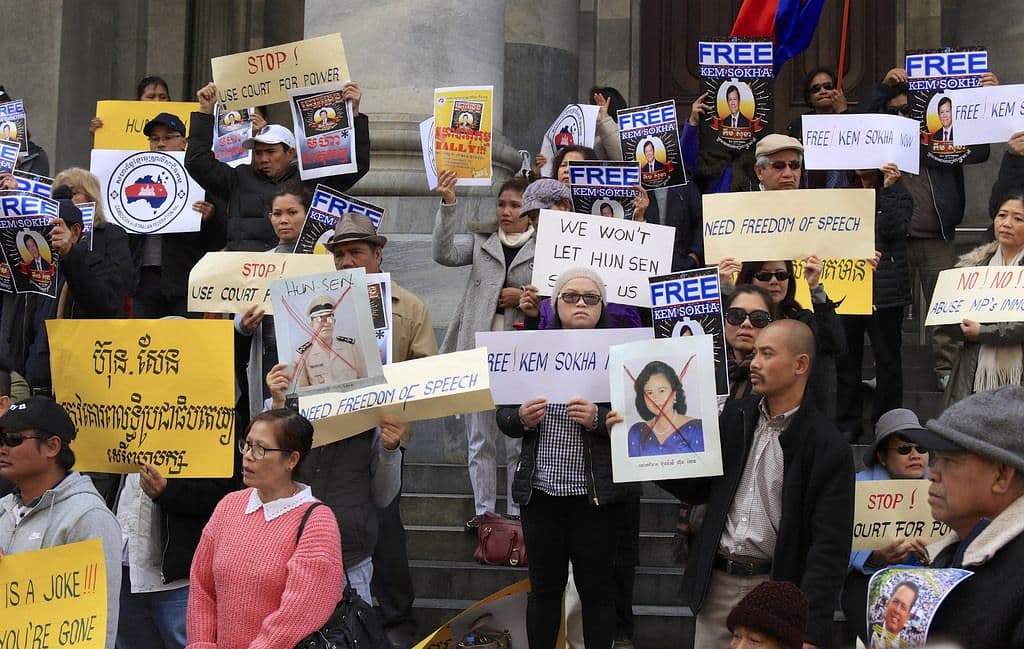
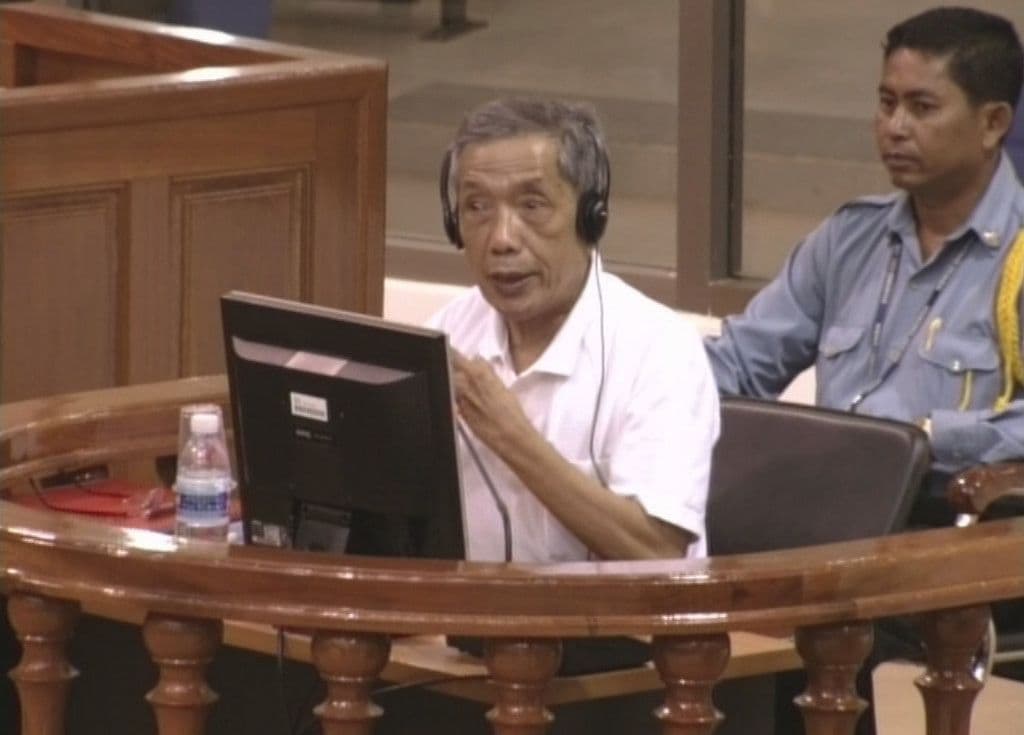
The tribunal faced many delays due to the Cambodian government's political interference, wanting to protect the former Khmer Rouge leaders in its ranks. The first indictments were handed down in 2007, and the first trial was against Kaing Guek Eav, who ran the brutal S-21 concentration camp in Phnom Penh. From more than 50,000 members of the Khmer Rouge, the actions of only nine people have been investigated so far. Pol Pot was never punished for his crimes and died peacefully in his sleep in 1998. Out of the nine investigated, two men, who held senior positions in the business and political scene, were freed by Hun Sen. The others died during the trial or were sentenced for crimes against the Vietnamese people and the Muslim minority. No one was convicted for the Cambodian genocide because Hun Sen, who played a part in it, had no interest in reviving the subject.
To this day, Hun Sen rules Cambodia despite his past association with the Khmer Rouge. The covid-19 crisis had tainted his political legacy, although it hadn't toppled him. For decades, he has told the Cambodians that their country would descend back into the tyranny of genocide and civil war if he were ever removed from office. The global pandemic decimated the vital tourism and textile manufacturing sectors, and the rest of the economy is slowing grinding to a halt. Hun Sen is becoming increasingly unpopular but more powerful. This dynamic may eventually spell the beginning of the end for him.


