Bhutan Travel Guide
BRIEF INTRODUCTION
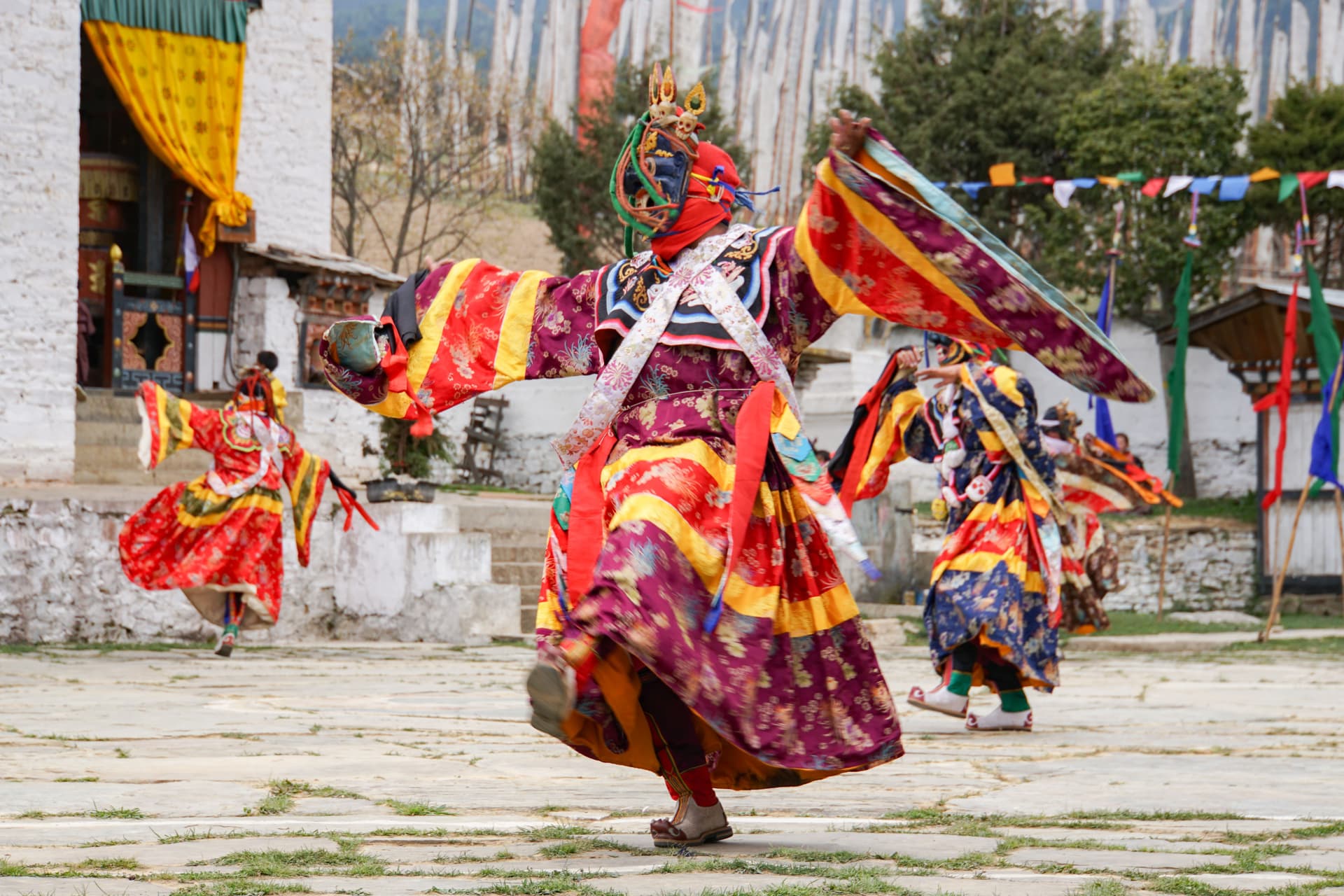
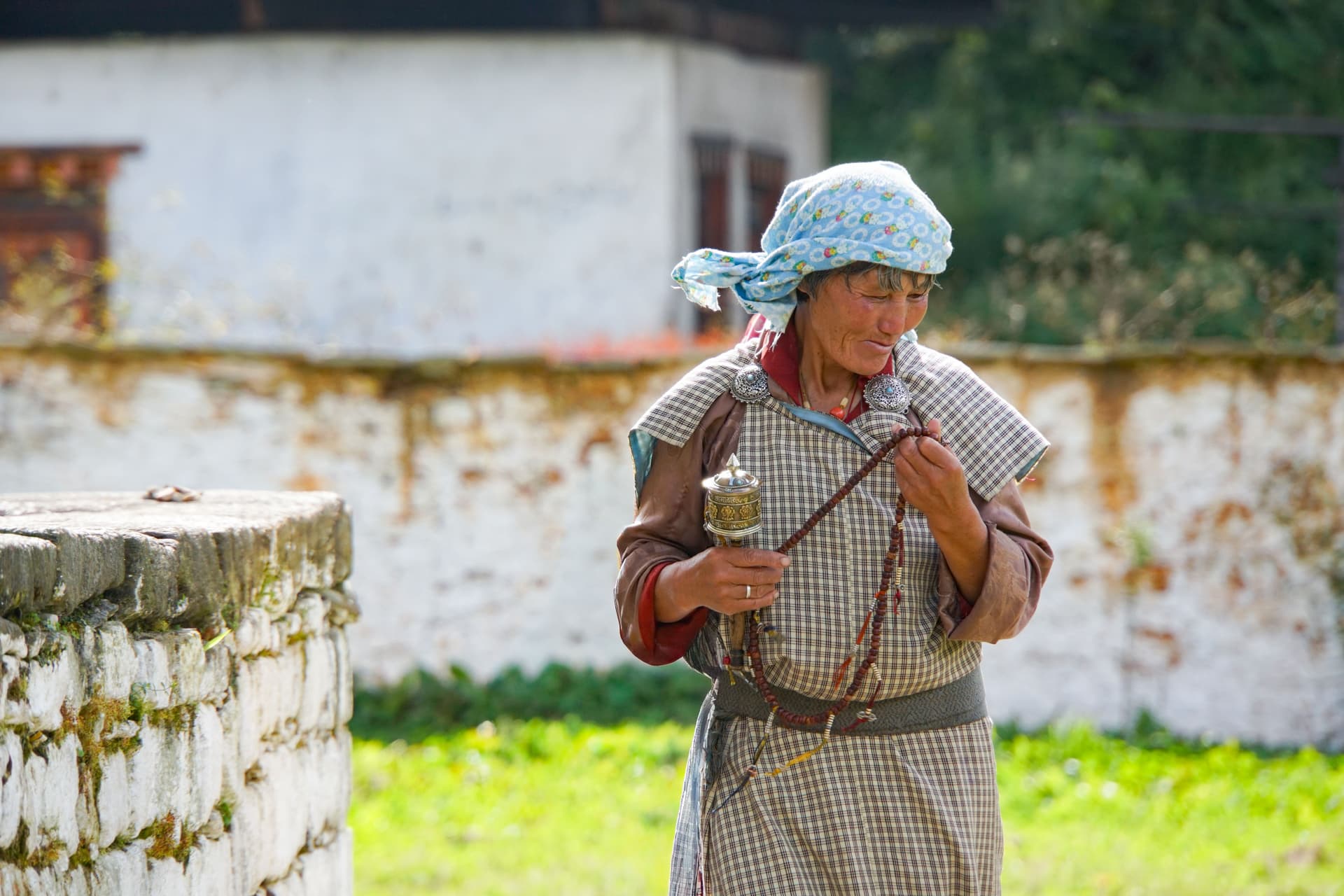
Bhutan sits quietly in the Eastern Himalayas, a nation defined by its mountains, valleys, and enduring traditions. With a population of just over 750,000, including semi-nomadic communities moving seasonally between highland pastures and temperate valleys, the country has preserved much of its historical and cultural fabric. Daily life is closely intertwined with Mahayana Buddhism, evident in cliffside monasteries, the rhythm of local festivals, and the fluttering of prayer flags across the landscape. Visitors encounter a society where customs remain central to daily life, modern influences are subtle, and the pace of life reflects both the terrain and long-held traditions. Here, travel is not simply about sights; it is about immersion, reflection, and experiencing a way of life deeply connected to nature, heritage, and meaning.
TOURISM INSIGHT
Traveling to Bhutan is unlike visiting any other destination. It’s a journey into a nation that chose preservation over modernization for most of its recent history. Until the late 20th century, Bhutan remained cut off from the outside world. Television and the internet only arrived in 1999, and even today, Bhutan’s development remains intentionally measured. This deliberate pace has helped safeguard its cultural identity, architectural heritage, and spiritual traditions.
Tourism officially began in 1974, timed with the coronation of the fourth king. That year, just 287 international guests were welcomed. From the start, Bhutan adopted a “high value, low volume” tourism model: rather than attract mass tourism, the government instituted a minimum daily spending policy to ensure tourism would be both economically beneficial and culturally protective. This policy, still in place today, covers licensed guides, accommodation, meals, and sustainable development fees, which are designed to fund public health, education, and infrastructure.
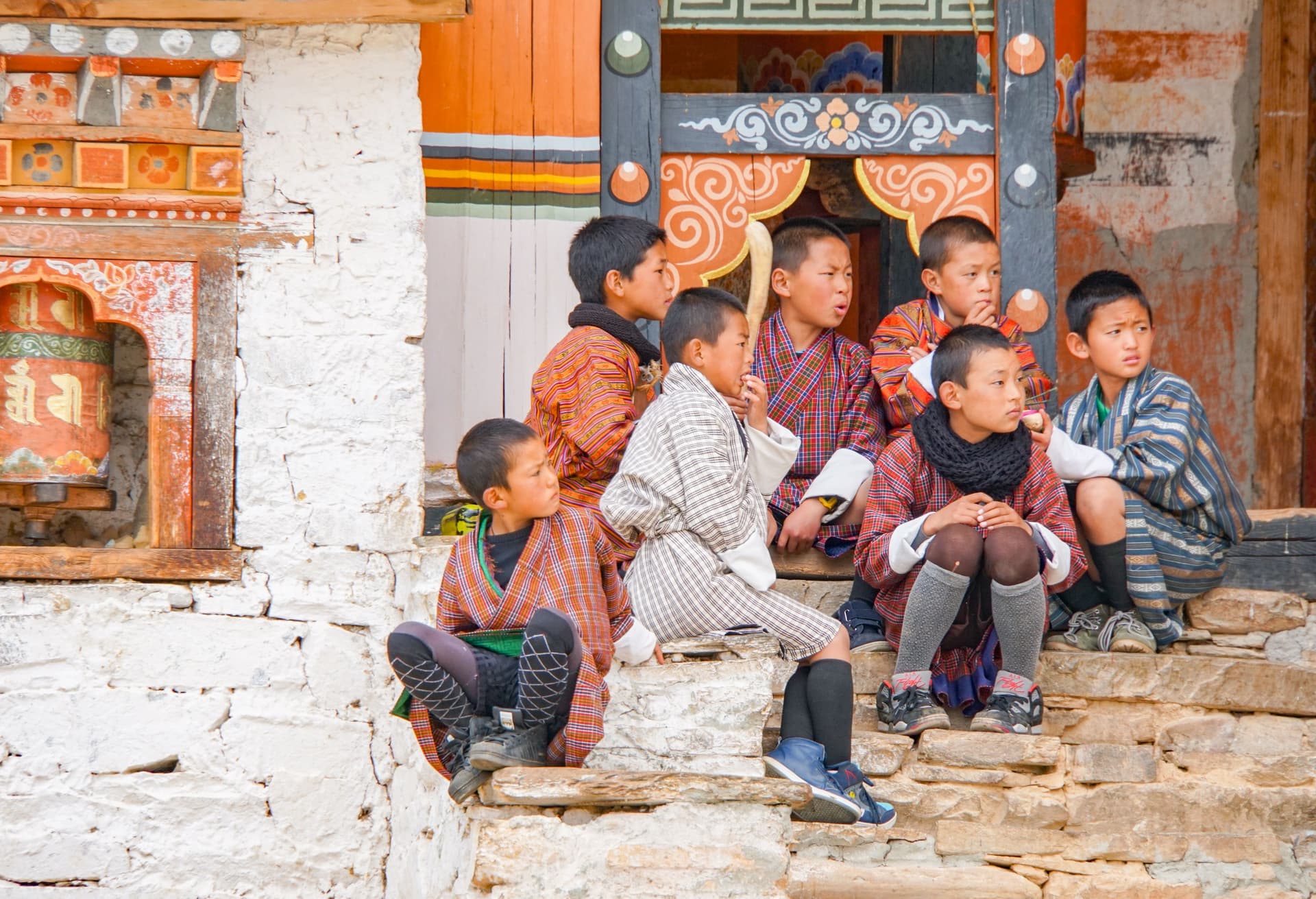
Visitors often remark that Bhutan feels like traveling back in time. Far from being a museum-state, Bhutan is very much alive, with vibrant festivals, evolving art forms, and youth who bridge tradition and global curiosity.
A typical Bhutanese itinerary weaves together natural and spiritual highlights: trekking through rhododendron-covered trails (Bhutan is known for its diverse and abundant rhododendron species), attending a masked tshechu festival in a mountaintop dzong, or sharing tea with a farming family in the fertile valleys of Punakha or Bumthang. From the Tiger’s Nest Monastery to the serene Phobjikha Valley, each experience is designed to deepen one’s understanding of a nation that measures success not by GDP, but by Gross National Happiness.
PRACTICAL INFORMATION
IMPORTANT
All travelers to Bhutan (except Indian, Bangladeshi, and Maldivian citizens) need a visa approval letter before flying. The visa is issued on arrival, typically at Paro International Airport, where an immigration officer stamps the passport using the pre-approved clearance. Without this letter, you won't be able to board.
To obtain the visa, we will submit the following items on your behalf at least 30 days before departure:
- Passport copy (valid for at least six months beyond entry and with at least three blank pages)
- Passport photo
- Full itinerary
- Travel insurance (optional but recommended)
- Travelers do not pay for the visa, as it is included in the trip price. (The visa is issued only for those who have fully paid for their trip.)
Visa and entry requirements
Bhutan requires all international visitors (except Indian nationals) to pay a Sustainable Development Fee (SDF) for each night spent in the country. This policy supports Bhutan's long-standing "high value, low volume" tourism model.
Current rates (2026):
• International visitors: USD 100 per person per day
• Children (6-12): USD 50 per person per day
• Children (under 5): Exempt from the SDF
• Visitors from India: ₹1,200 per person per day
Important notes:
• The SDF is separate from all other travel costs, including hotel rates, meals, guides,
and transportation.
• The fee directly funds Bhutan's national programs in healthcare, education,
environmental protection, and cultural preservation.
• This fee is separate from the visa fee for Bangladesh and Maldives travelers.
• The SDF must be paid in advance as part of the visa approval process.
This information is accurate as of June 2025. For the most current and reliable updates, you can visit the official website and confirm the details before you leave.
NOTE: Please ensure your passport is valid for at least 6 months beyond your entry date to Bhutan and has at least three blank pages.
Medical record and liability release: All travelers must complete and sign our trip application form, which includes these documents.
ELECTRICITY
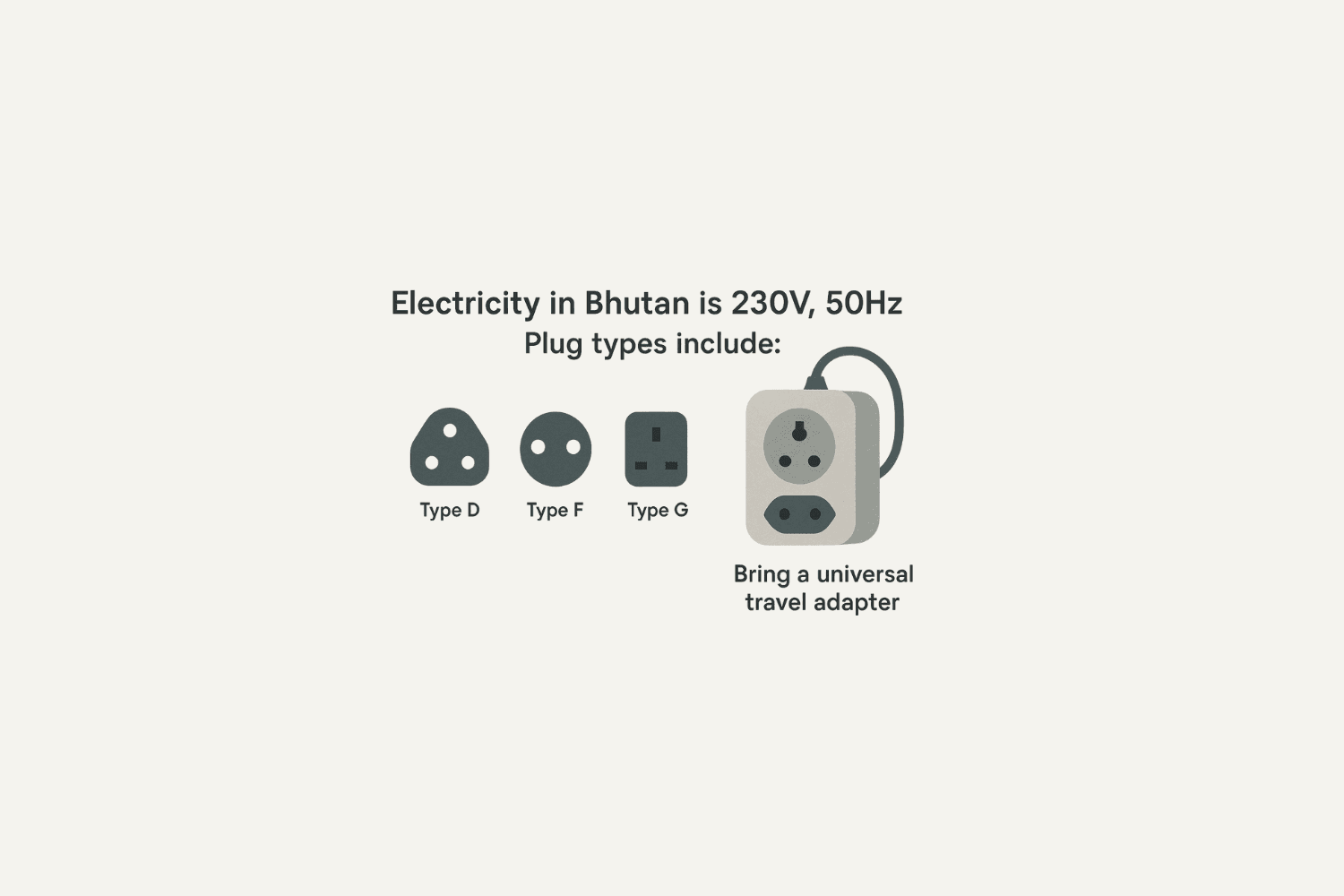
Bhutan operates on a 230V supply voltage and 50Hz. The country uses multiple plug types:
- Type D: Three round pins in a triangular pattern
- Type F: Two round pins with two earth clips on the side (commonly used in Europe)
- Type G: Three rectangular pins (commonly used in the UK)
It's advisable to bring a universal travel adapter to accommodate these plug types.
INTERNET AND SIM CARDS
Wi-Fi is available in most hotels, though speed and reliability vary, especially outside Paro and Thimphu. In remote areas, access may be limited to lobbies or dining spaces.
Travelers can purchase a local SIM card from B-Mobile or TashiCell at the airport or in town. A passport is required for registration. Coverage is good in urban centers and sparse in rural regions. Local data plans are affordable (USD 5–10 for 1–2 GB). Phones must be unlocked. Messaging apps like WhatsApp work normally. Roaming is possible but expensive and often unreliable. Another increasingly popular option is e-SIM (electronic SIM). If your phone supports it (most modern smartphones do), you can purchase and install the virtual SIM before departure, so your phone connects automatically upon landing.
NOTE: If using a local SIM, your home-country number will be inactive, but WhatsApp and similar apps remain functional as long as account settings aren’t changed.
CURRENCY AND MONEY
Bhutan's official currency is the Bhutanese Ngultrum (BTN), which is pegged to the Indian Rupee (INR) at a 1:1 ratio. Please check the USD=BTN rate here.
As of June 2025:
- 1 USD ≈ 86.8 BTN
- 1 EUR ≈ 100.0 BTN
- Foreign currencies such as USD and EUR can be exchanged at the airport and at banks in Thimphu, though the process may be time-consuming. Large hotels might offer currency exchange services at slightly less favorable rates. Indian Rupees are widely accepted, but it's advisable to avoid 500 and 1,000 INR notes due to potential counterfeiting.
Credit card usage is limited in Bhutan.
Some major hotels and shops accept them (primarily MasterCard), but it's best to carry sufficient cash for your expenses.
IMPORTANT
If you bring foreign currency notes (USD or EUR), ensure the bills are new, clean, and free from marks or tears. For US dollars, bills issued before 2006 are often not accepted due to counterfeiting concerns. Larger denominations, such as USD 100 or EUR 100, are generally easier to exchange and offer better rates.
TIPS (GRATUITIES)
In Bhutan, tipping is appreciated but not expected in most situations. The culture emphasizes sincerity and personal interaction over monetary gestures.
As a general reference:
- Tour guide: USD 8–10 per traveler per day
- Driver: USD 4–6 per traveler per day
- Hotel porters/housekeeping: USD 1–2 per bag or per night\
Tips can be given in USD or local Ngultrum (BTN); both are accepted. Ultimately, while tipping is not obligatory, it contributes meaningfully to the livelihoods of those who ensure your journey runs smoothly, and is a mark of cultural respect and appreciation.
PERSONAL EXPENSES
Before your trip, please review your proposal carefully to understand what is included in your package and what is not. If you are not sure, please don't hesitate to contact us.
The trip to Bhutan covers meals, transportation, accommodation, and site visits. Travelers mainly need money for souvenirs, extra food and drinks, communication, laundry, and other personal expenses. Typically, $100–200 per person for 10 days is good, but adjust based on your shopping habits or drink preferences. Remember, exchanging foreign currency outside Thimphu isn't easy, so bring enough cash.
Important Considerations:
- Communication: Costs for SIM cards, data plans, or international calls should be considered.
- Laundry: Most hotels offer laundry services, which may incur an extra charge.
- Cash Management: ATMs are limited, primarily in Thimphu, and often have withdrawal limits. Please make sure you have enough cash for the entire trip.
International grocery store chains are not present in Bhutan. Imported food and beverage products are primarily available through local supermarkets and specialty shops in Thimphu and Paro. These outlets stock a limited range of international packaged goods catering to residents and visitors. Outside the main towns, access to imported groceries is minimal, with most provisions sourced locally. Hotels and lodges in key tourist areas offer a limited selection of imported items to meet guests' needs.
HEALTH
We are not authorized to provide medical advice. Please consult your doctor before your trip about vaccinations or precautions. If you take regular medication, bring enough for the entire trip, as some medicines are hard to find outside of your country. Always carry medications in your hand luggage, not checked baggage.
Medical record and liability release: All travelers must complete and sign a trip application form, which includes these documents.
Medical services in Bhutan are limited outside major towns, and while basic care is available, international travelers should be aware that treatment for foreign visitors is not free. Foreigners are charged full fees for consultations, tests, medications, and any hospital procedures, and costs can rise quickly, especially in remote regions where evacuation may be required. Comprehensive travel insurance that covers medical treatment, emergency evacuation, and high-altitude issues is strongly advised.
Altitude Sickness:
Much of Bhutan lies at moderate to high altitudes, and popular destinations like Paro, Thimphu, Punakha (lower), Gangtey, Bumthang, and most trekking areas involve some altitude exposure. Altitude sickness is uncommon below 2,500 meters (8,200 feet), but symptoms can appear from roughly 2,600–3,200 meters (8,530–10,500 feet), especially on higher passes or multi-day treks. Routes such as the Druk Path, Jomolhari, Laya–Gasa, and Snowman reach significant elevations, so acclimatization, hydration, and gradual ascent are essential.
High-altitude medication and painkillers are available in Bhutan but may be costly or limited outside major towns. Bring your own altitude medication, personal prescriptions, and basic over-the-counter supplies. Report symptoms early (headache, nausea, dizziness, shortness of breath) to prevent worsening, especially in trekking areas where descending may be the only effective treatment.
Climate factors such as strong sunlight, dry air, and cold temperatures can affect comfort. Sunscreen, lip balm, layered clothing, and hydration are recommended. Anyone with heart or lung conditions must consult a doctor before visiting high-altitude regions.
Malaria & Tropical Illness:
Malaria is very rare in Bhutan and typically limited to isolated areas near the southern border with India. If your itinerary includes travel to those southern lowlands, you should speak with your doctor and with us about preventive medication. Insect repellent and long sleeves during dusk and dawn hours are usually sufficient for protection.
TRAVEL HEALTH INSURANCE
Valid travel insurance is mandatory for all travelers. Your policy must cover medical evacuation, including emergency air transport back to your home country.
Carry both printed and digital copies of your insurance certificate, along with your policy number and your insurer’s 24/7 emergency contact details. If anything unexpected happens during your trip, our team and local partners will assist where possible, including helping you communicate with medical staff and your insurance company.
Travelers are advised to review their policy terms carefully, ensuring that high-altitude travel, adventure activities, and trip cancellation are included if relevant. Bhutan's remote terrain and limited medical infrastructure in rural areas make medical evacuation coverage particularly essential.
Travel health insurance can be arranged through your home country provider, or you can come to us if needed.
Note: This information is accurate as of June 2025. Please verify current requirements with the Department of Immigration of Bhutan.
ACCOMMODATIONS
Most itineraries in Bhutan include accommodations that meet local four-star standards, though it’s important to note that Bhutan does not operate a formal hotel rating system. While the properties are generally clean, well-managed, and comfortable, luxury here is defined more by ambiance and serenity than by opulence or modern features.
Accommodations typically take the form of low-rise, resort-style lodges or small boutique hotels, often with traditional Bhutanese architectural elements. Many are spread across several buildings, requiring moderate walking (300–400 meters) between reception, dining areas, and guest rooms. Guests with limited mobility should inform us in advance so we can request rooms closer to central facilities, though such arrangements may involve additional charges and are subject to availability.
Most hotels are small, intimate establishments with 5 to 20 rooms. Because of this scale, amenities and room quality can vary even within a single property. Differences in size, location, and views are common and part of the Bhutanese travel experience.
Outside of the capital Thimphu, Paro, and the Punakha Valley, accommodations tend to be simpler and more rustic. In these regions, travelers can expect basic facilities, such as limited heating, variable hot-water pressure, or poor sound insulation. Still, they will often receive attentive service and a warm welcome.
For those seeking elevated comfort, premium and luxury hotels are available in major centers, including international brands such as Six Senses, COMO, and Aman. These properties offer world-class service and refined wellness experiences, though they come at a significantly higher price point.
TRANSPORTATION AND TRAVEL
Travel within Bhutan is generally conducted in comfortable, private vehicles tailored to group size, sedans for individuals or couples, and minibuses for larger groups. Roads are paved and steadily improving, yet much of the network still passes through steep mountain passes, sharp bends, and occasionally uneven surfaces. Consequently, travel times between destinations are often longer than the distances might suggest. Travelers prone to motion sickness should carry appropriate medication, and flexibility is advised when planning daily itineraries. Luggage handling is straightforward for typical trips, though vehicles have limited storage space, so packing efficiently is recommended.
FLIGHTS AND BAGGAGE
Bhutan’s sole international airport is Paro International Airport, located near Thimphu, and known for its challenging mountain approach. Domestic flights are limited but available from Paro to Bumthang, Gelephu, and Yonphula, providing access to remote regions.
As is common worldwide in aviation, flights to Bhutan have baggage weight limits: checked luggage is limited to 20 kg in economy class (sometimes up to 25 kg depending on the airline's policy), and 30 kg for business class. Carry-on luggage is limited to 5-8 kg (depending on the airline) and must not exceed 45 x 35 x 20 cm.
Note that if you fly to and from Bhutan with Druk Air, the airline allows 30 kg for economy-class passengers and 40 kg for business-class passengers. On domestic flights, strict enforcement of the 20 kg per person luggage limit applies, mainly because flights are operated on small aircraft and at high altitude.
FOOD
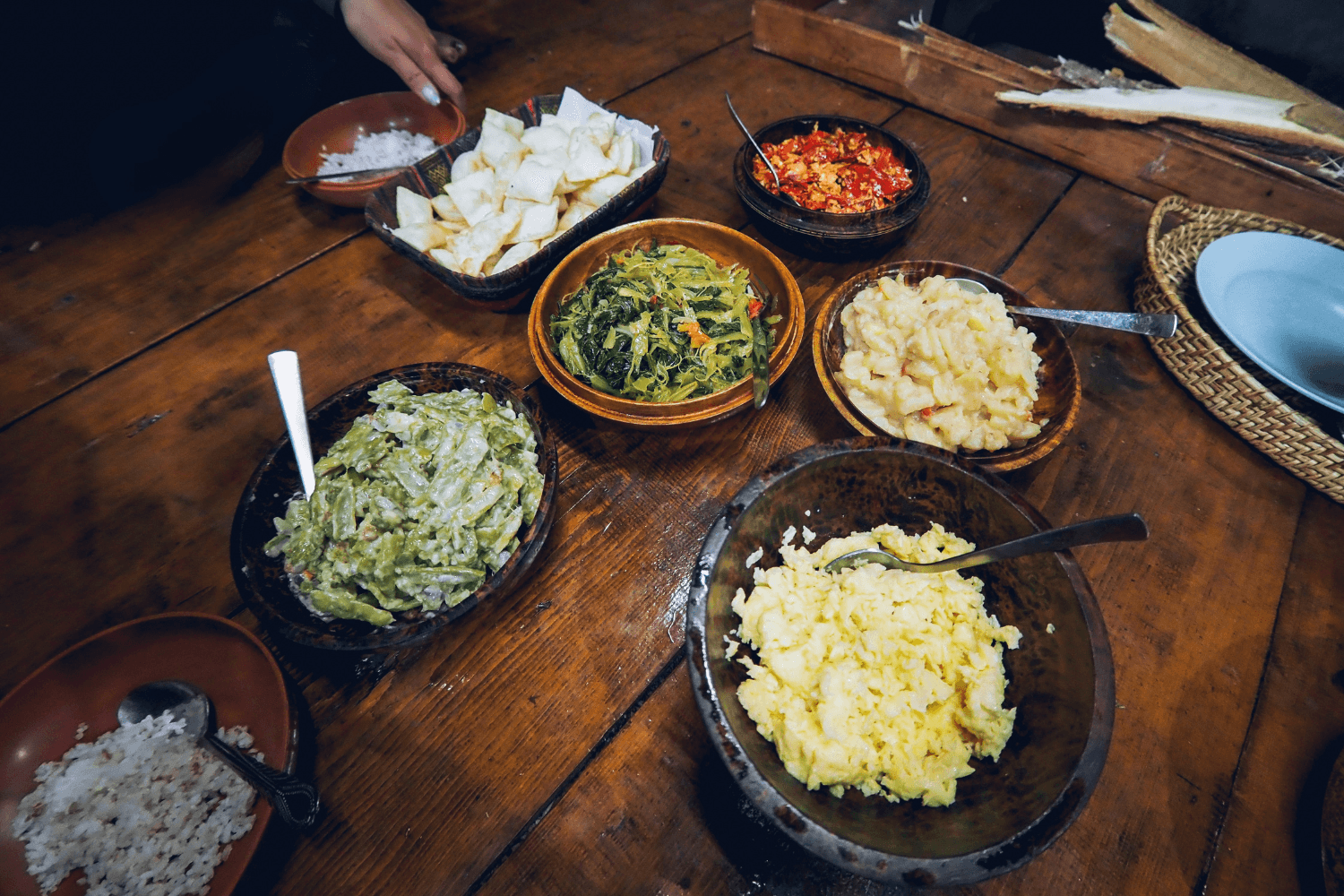
Bhutanese cuisine reflects the country’s geography, climate, and deep cultural traditions. High mountain valleys and cool temperatures shaped a diet built on hardy grains like red rice and buckwheat, along with potatoes, chilies, dairy, and meat. For generations, families relied on what they could grow and preserve, creating dishes that are simple, comforting, and rooted in daily life rather than ceremony.
One defining feature of Bhutanese food is the use of chilies. They are not treated as a garnish but as a vegetable, appearing fresh, dried, or ground in nearly every meal. The frequent use of cheese and dairy, especially butter made from cow or yak milk, balances the heat and gives many dishes a rich, rustic character. This combination of chilies and cheese is the heart of Bhutanese cuisine and speaks to the country’s taste for warmth and nourishment in a cold, mountainous environment.
Visitors often find Bhutanese food hearty rather than diverse, with similar ingredients prepared in different ways across the country. What it lacks in variety, it makes up for in authenticity. Meals are usually eaten family style, and the flavors you encounter in remote valleys or village homes are the same ones locals have enjoyed for generations.
Signature dishes:
- Ema Datshi: Bhutan’s national dish, a hearty stew of chili peppers cooked with local cheese; spicy, simple, and deeply traditional.
- Kewa Datshi: A mild potato and cheese stew, less spicy than ema datshi and commonly served in everyday meals.
- Shakam Paa: Sun-dried beef stir-fried with chilies, often served with red rice; a staple in many Bhutanese households.
- Phaksha Paa: Sliced pork cooked with red chilies and vegetables, offering a rich and slightly smoky flavor.
- Red Rice: The country’s staple grain, grown in the highlands; slightly nutty, soft, and naturally reddish in color.
Bhutan’s cuisine is less about culinary flair and more about nourishment, tradition, and the quiet rhythm of daily life. It is food that reflects where you are: high in the mountains, surrounded by a culture that values simplicity, warmth, and balance.
CULTURAL ETIQUETTE & MODESTY NORMS
In Bhutan, etiquette is not merely a set of rules; it is a quiet expression of the country’s reverence for harmony, humility, and tradition. Deeply influenced by Vajrayana Buddhism, the social fabric here is woven with ritual, symbolism, and profound respect for hierarchy and sacred space. As a guest in the Land of the Thunder Dragon, your cultural sensitivity will be your most valued passport.
Dress and Decorum
- Modest attire is essential, especially when visiting temples, dzongs (fortresses), and official venues. Long trousers or skirts and covered shoulders are required; sleeveless tops, shorts, and tight clothing should be avoided.
- When entering a temple or monastery, remove hats, sunglasses, and shoes where indicated. Silence or quiet tones are expected inside.
- Feet are considered the lowest part of the body; never point them at people or sacred images, and avoid stepping over personal belongings.
Interpersonal Respect
- Bowing slightly with hands pressed in a prayer gesture (known as namaste or kuzu zangpo la in Dzongkha) is a respectful and traditional greeting.
- Touching the head is inappropriate, as it is considered the most sacred part of the body. Refrain from casual physical contact, including patting children.
- Bhutanese maintain personal space and formal composure. Public displays of affection are viewed as inappropriate and best kept private.
Conversation and Conduct
- Speech is calm and composed; speaking loudly, joking about religion or politics, or engaging in debate may come across as disrespectful.
- Elders and monks are deeply respected. Greet them first, step aside to let them pass, and never interrupt or contradict them in public.
- When offered a gift or food, it is polite to receive it with both hands and show appreciation, even if you choose not to partake.
Spiritual Sites and Rituals
- Bhutan’s spiritual sites are active places of worship. Always walk clockwise around stupas, prayer wheels, and temples.
- Photography may be restricted in sacred areas; ask before taking pictures, especially during ceremonies or inside monasteries.
- If invited to join a local festival or ritual, observe and follow your guide’s advice. Participation is welcome, but reverence is key.
WEATHER AND RECOMMENDED SEASONS
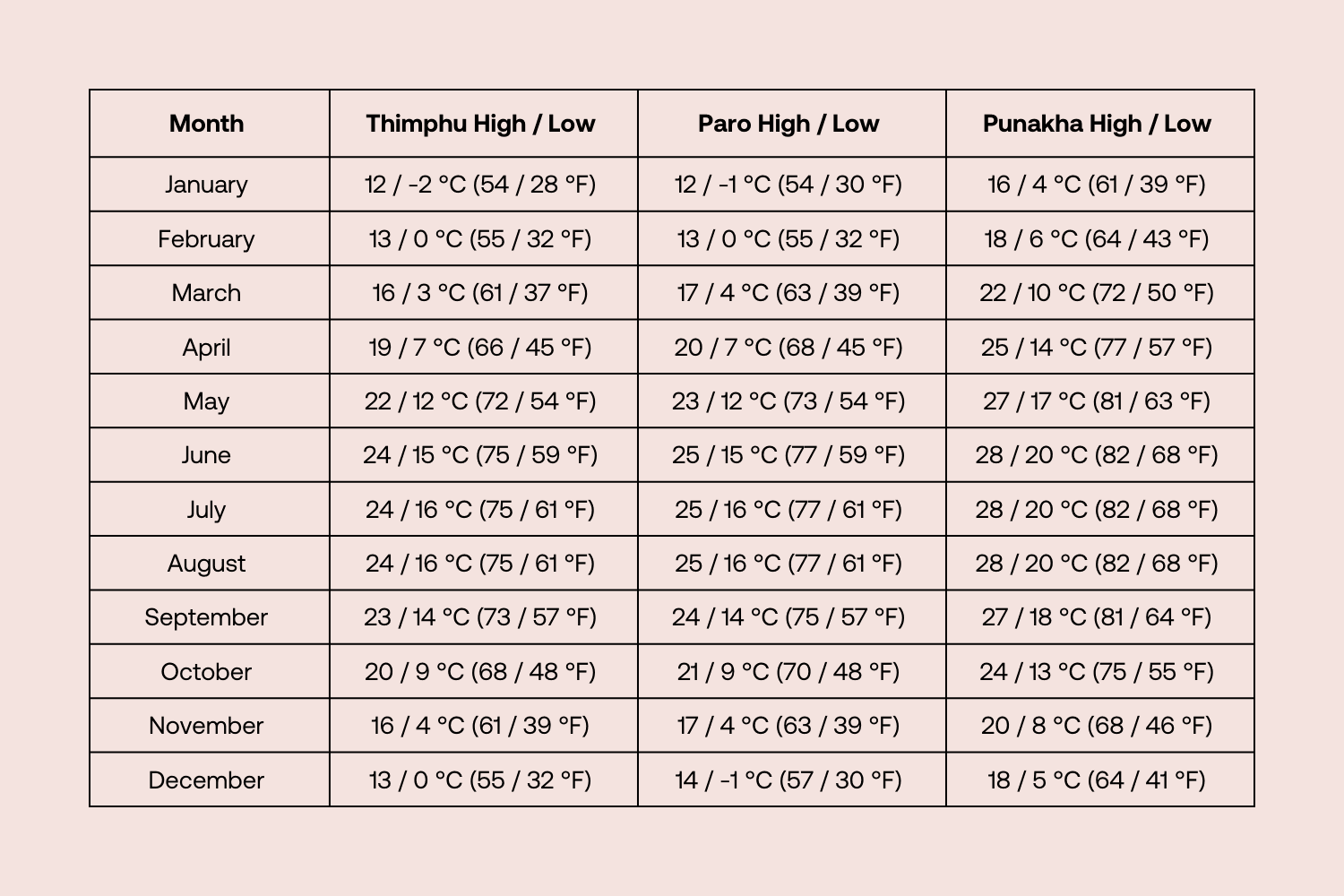
Generally, the year can be divided into three main seasons regarding travel:
The Peak Season: March-May and September-November offer pleasant weather, making them ideal for travel. Spring showcases rhododendron blooms, while autumn provides clear Himalayan views. These periods often coincide with Bhutan’s festivals, making advance planning essential.
The Intermediate Season: December-February brings cold but manageable weather, clear skies, and scenic mountain views. Snow is rare in valleys and towns, ensuring travel can proceed smoothly.
The Monsoon Season: June-August sees heavy rains, making travel challenging and less enjoyable.
RECOMMENDED PACKING LIST
This list varies by season and trip type. For summer, bring rain-resistant clothing; For winter, pack heat-retaining clothes. If your trip involves trekking or extensive walking, focus on appropriate gear.
Clothing Essentials
- Moisture-wicking base layers (tops and underwear – quick-dry, odor-resistant)
- Short-sleeve shirts (breathable and quick-dry)
- Long-sleeve shirts (sun protection + layering)
- Convertible trekking pants (lightweight, zip-off style preferred)
- Fleece or insulated mid-layer
- Lightweight windproof/rain jacket (Gore-Tex or similar)
- Rain pants (especially for monsoon season or jungle areas)
- Down jacket or warm insulated jacket (Nov–Feb or any highland region)
- Wool hat and gloves (essential year-round for mountain areas)
- Sun hat or baseball cap
- Swimsuit (for hotel pools or hot springs)
- Socks (3–5 pairs, moisture-wicking or wool blend)
- Comfortable sandals/flip-flops (for rest days or hotels)
- Hiking boots (broken-in, high-ankle, waterproof)
- Casual outfit (for dinners in town or cultural visits)
Bags & Carriage
- Daypack (25–35L) – carry-on size with padded shoulder straps
- Large duffel bag or soft travel backpack (avoid hard suitcases)
- Dry bag or plastic liners (to protect contents from rain)
- Money belt/neck pouch/ankle wallet (for valuables)
Health & Hygiene
- Personal first aid kit (including band-aids, antiseptic, anti-diarrhea meds, altitude pills if prescribed)
- Hand sanitizer & wet wipes
- Toiletries (travel-size, eco-friendly where possible)
- Toilet paper/tissues (often not provided in public toilets)
- Sunscreen & Lip balm with SPF
- Insect repellent
- Quick-dry towel
Electronics & Tools
- Headlamp or flashlight (power cuts can occur; keep hands free)
- International power adapter (Bhutan uses mostly Type D, F, and G; 230V, 50Hz )
- Camera, memory cards, batteries
- Mobile phone & charger
- Portable power bank
- E-reader or compact guidebook
Trekking Accessories
- Trekking poles (foldable or telescopic)
- Water bottle (minimum 2-liter capacity or two 1L bottles)
- Water purification tablets or a portable filter (for rural areas)
- Snacks/energy bars/trail mix (availability limited outside cities)
- Pocket knife or multi-tool (pack in checked luggage)
Optionally, culturally appropriate gifts can offer a heartfelt way to connect with local communities. Thoughtful items such as school supplies, simple accessories, or small handmade tokens are often warmly received, particularly in rural areas where such gestures carry added significance.
- School supplies (pencils, crayons, English booklets)
- Simple scarves, bracelets, and handmade crafts
- Inflatable globes or balls (great for kids)
- Lip balm or cosmetics (for adult women)
- Do not bring sweets; locals often lack access to dental care
DRONE USE
Drone use is prohibited for private individuals and companies in Bhutan; only government entities can operate drones with prior approval from the Bhutan Civil Aviation Authority (BCAA). Visitors must declare any drones upon arrival, and they will be confiscated or held until departure. The strict rules are in place to protect cultural heritage, privacy, and safety, and they apply to all drones, regardless of size.
Key drone regulations in Bhutan
- Authorization: Only government organizations can apply for registration and operational permits, which require 30 days' advance notice to the BCAA.
- Importation: You cannot bring a drone into Bhutan without prior written approval; any drone found at customs will be confiscated.
- Prohibited areas: You cannot fly over religious buildings with yellow roofs, near airports, government facilities, or during festivals.
- Safety restrictions: Flights must be within the operator's visual line of sight and not exceed 90 meters (300 feet) in altitude.
- Consequences: Your tour guide or operator can face fines if you are caught flying a drone illegally.
- Permits for government projects: If you have an official, government-sanctioned project, coordinate at least a month in advance, and your Bhutanese host agency will handle the necessary documentation.
HISTORY
In Bhutan, history is not stored behind museum glass; you can see it in everyday life, echoed in chants, carved into dzong walls, and honored with every prostration on a monastery floor.
Long before Bhutan appeared on modern maps, the land was a patchwork of remote valleys ruled by feuding warlords and dotted with fortress-monasteries perched on mountain ridges. These dzongs, still central to Bhutanese governance and spirituality, once served as bulwarks against Tibetan invasions and internal conflict.
The turning point came in the 17th century, when Zhabdrung Ngawang Namgyal, a charismatic Tibetan lama and statesman, fled sectarian strife in Tibet and unified Bhutan under a theocratic rule. A brilliant strategist and spiritual leader, he laid the foundations of what is now Bhutanese national identity, codifying laws, standardizing Buddhist rituals, and building many of the majestic dzongs that still command Bhutan’s landscapes. His vision, which blended politics with spirituality, shaped the dual system of governance (monastic and civil) that remains unique to Bhutan.
The next significant evolution arrived in 1907, when Bhutan peacefully established its hereditary monarchy, electing Ugyen Wangchuck as the first king, ushering in a period of political consolidation and cautious modernization. Under the rule of the Wangchuck dynasty, Bhutan slowly opened its doors to the world while fiercely guarding its cultural autonomy. Foreign influence was minimal, and until the 1960s, the kingdom had no paved roads, electricity, or a widely used currency.
It wasn’t until the late 20th century that Bhutan began its bold social experiment on the global stage. In 2008, under the young and visionary leadership of King Jigme Khesar Namgyel Wangchuck, Bhutan transitioned to a constitutional monarchy, held its first democratic elections, and reaffirmed its guiding development principle: Gross National Happiness (GNH). Unlike GDP, GNH places cultural preservation, spiritual well-being, environmental conservation, and good governance at the heart of national policy.
Today, Bhutan’s past is not buried in ruins or textbooks. It breathes through its living monasteries, sacred festivals, and centuries-old trails connecting hilltop hamlets. For visitors, every encounter with a robed monk, a fluttering prayer flag, or a golden-roofed dzong feels like touching history in motion. In Bhutan, the past is not something behind you; it’s the road beneath your feet.
RELIGION
Bhutan is not merely a Buddhist country; it is a sanctuary where spirituality shapes the very rhythm of daily life. As one of only two nations in the world to uphold Vajrayana Buddhism as its official religion, Bhutan offers a rare window into a deeply esoteric, symbol-rich tradition of Tantric practice that remains remarkably intact.
Rooted in Tibetan Buddhist cosmology, Bhutan’s spiritual landscape is as layered as its mountain ranges. Several Buddhist sects coexist here, each with its own philosophical nuances, rituals, and pathways to enlightenment. The Drukpa Kagyu, also known as the “Red Hat” school, is the state religion and the most widely followed. However, other traditions, such as Gelugpa (Yellow Hats), Karmapa (Black Hats), and Nyingma (White Hats), are present in monastic communities throughout the kingdom.
Each lineage emphasizes distinct aspects of Buddhist practice. Some schools focus on scholasticism and philosophical debate, while others delve into mystical rituals and meditative insight. Even the ultimate spiritual aim may differ, from achieving personal liberation to returning as a bodhisattva to serve all sentient beings.
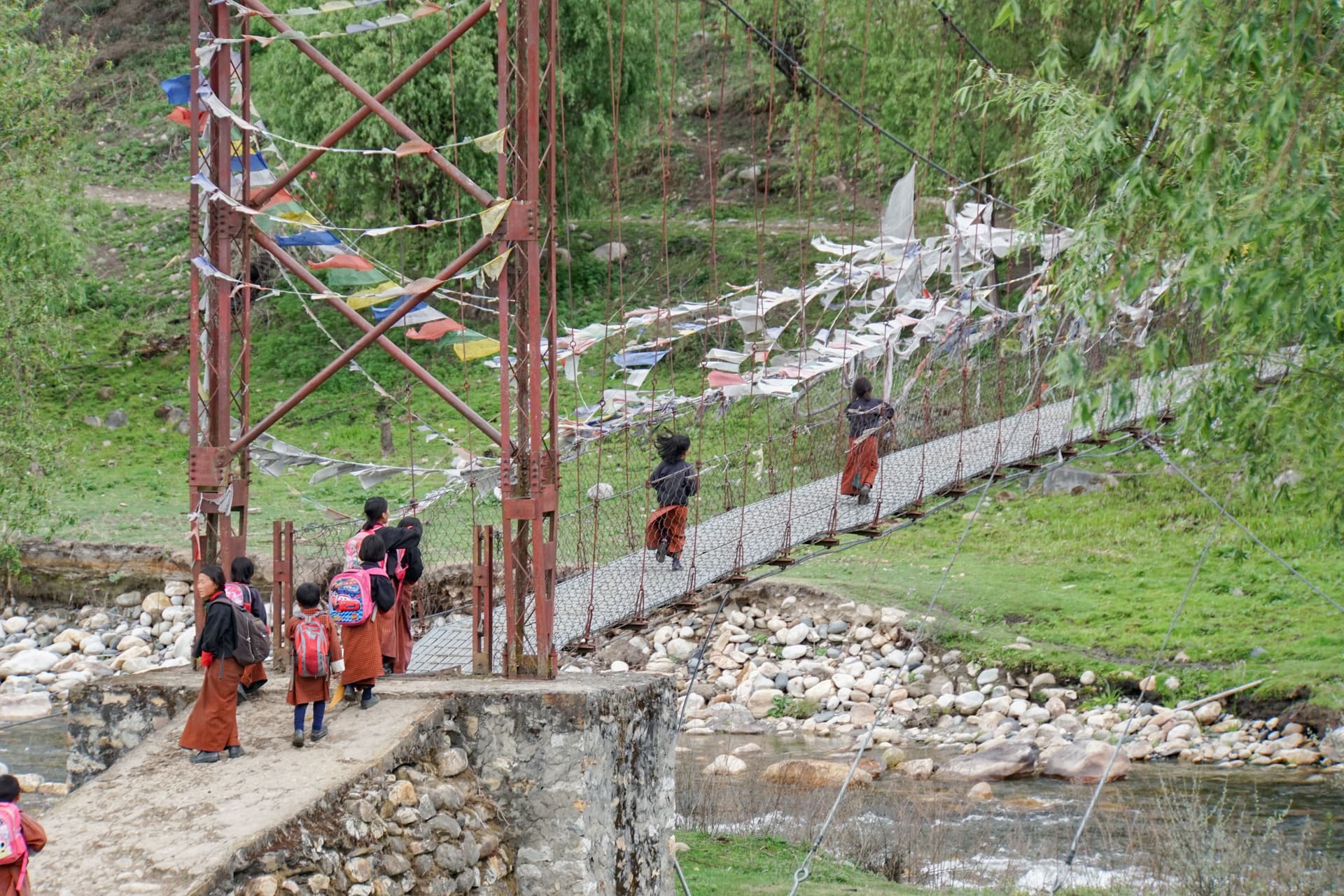
From hilltop monasteries to roadside chortens (stupas), from prayer wheels turned by mountain streams to sacred dances performed during tshechus (religious festivals), Bhutan is a country where devotion is not confined to temples; it flows seamlessly into the natural world and everyday encounters. Visitors often leave not only with photos of breathtaking dzongs but also with a deeper sense of introspection and peace.
GEOGRAPHY
Cradled by the towering Himalayas to the north and the steamy plains of India to the south, Bhutan unfolds like a vertical tapestry of forests, valleys, and snow-clad peaks. This mountain kingdom spans dramatic altitudes, from subtropical lowlands at just 97 meters (318 feet) to the sky-piercing Gangkhar Puensum, which rises above 7,500 meters (24,600 feet) and is revered as the highest unclimbed mountain on Earth.
The country’s terrain is about 70% mountainous, with deep river gorges, forested ridges, and high passes shaping the rhythms of daily life and travel. Roads curve through serpentine mountain corridors, linking secluded dzongs (fortress-monasteries), terraced farms, and serene towns that seem preserved over time. While infrastructure has steadily improved, overland journeys remain slow-paced, each turn offering a new panorama of mist-laced valleys or fluttering prayer flags.
Bhutan’s geography is not merely a setting but a defining force. It nurtures an astonishing range of microclimates and biodiversity, from the subtropical jungles of southern Sarpang to the alpine meadows of Bumthang and Laya. This topographical variety also reinforces Bhutan’s regional identities: western Bhutan feels markedly different from its eastern reaches, both in its landscape and in its dialect.
With no railways and just one international airport in Paro, Bhutan remains intentionally difficult to access. A deliberate effort to preserve its fragile ecology and culture. For travelers, this means that every movement through the kingdom is part of the adventure, offering immersive encounters rather than fleeting checklists.
RECOMMENDED BOOKS
- Beyond the Sky and the Earth: A Journey into Bhutan - Jamie Zeppa (1999): A Canadian teacher’s transformative years in Bhutan.
- Buttertea at Sunrise - Britta Das (2006): A memoir on life in rural Bhutan.
- Under the Holy Lake - Ken Haigh (2008): An Insightful account of teaching in a remote Himalayan village.
- Treasures of the Thunder Dragon: A Portrait of Bhutan - Ashi Dorji Wangmo Wangchuck (2006): Written by Bhutan’s Queen Mother.
- The Circle of Karma - Kunzang Choden (2005): The first novel in English by a Bhutanese woman.
- Radio Shangri-La - Lisa Napoli (2011): A journalist’s rediscovery of life through Bhutanese culture.
- History of Bhutan (2016): Karma Puntsho
- Unremembered Nation: Karma Ura
RECOMMENDED MOVIES
- The Cup (1999): The first internationally acclaimed Bhutanese film, humorous and heartfelt.
- Travellers and Magicians (2003): Bhutan’s first feature film, exploring modernity vs. tradition.
- Hema Hema: Sing Me a Song While I Wait (2016): Mystical and visually stunning.
- Lunana: A Yak in the Classroom (2019): Academy Award-nominated, warm portrayal of rural education and values.
- The Monk and the Gun (2024): Pawo Choyning Dorji
REVIEWS
“Many thanks to Ron Oren andTrips@Asia for organizing our trip to Bhutan! We enjoyed it very much! We contacted Ron based on several recommendations and are glad we did. Ron helped us plan the trip, always willing tocheck anotheroption that could improve it, and there were a few of them. Nothing was too difficult to check or change. Communication wasvery easy; we got fast, clear, and detailed answers to our questions.Ultimately, we felt we had the right plan andaccommodations for our interests and budget, and there were no surprises. He contacted us daily during the trip to check how it was going. Wedidn't expect such involvement and weretruly impressed! We warmly recommend using the services of Ron Oren andTrips@Asia, and we certainly will use them in other trips in Asia.”
- VERA G on TripAdvisor
“A trip unlike many otherswe've taken around the globe, a profound and moving experience. I must say, without the planning, organization, and support throughout the journey provided by Ron from TRIPS ASIA, wewouldn't have made it there or had such a successful trip. By the end of it, we had already decided:we're coming back to Bhutan again in the spring.”
- IDO S on Google Reviews
“We flew to the Kingdom of Bhutan. Starting from the initial inquiry, we received a courteous and super professional response that led to tailoring a trip exactly according to our wishes and preferences. Accurate advice for preparations, full support at all hours of the day during the trip, including adjustments to our last-minute changes. The local team (guide + driver) was wonderful!”
– DAFNA on Google Reviews


